Natural thin stone or manufactured stone?
The two differ in look, weight and price. Natural stone is quarried and cut. Manufactured stone is cast in moulds and coloured.
Stone veneer is a thin layer of natural or manufactured stone bonded to a wall with mortar over metal lath, instead of a full-thickness masonry wall. Sela Developments installs natural thin stone and manufactured stone veneer in Calgary on columns, foundation skirting, accent walls and interior fireplace walls. We follow the Masonry Veneer Manufacturers Association method, with a water-resistive barrier, metal lath, a nominal 13 mm (1/2 in) scratch coat, and a weep screed at least 102 mm (4 in) above grade on frame walls.
01 · Overview
Stone veneer is a thin facing of real or manufactured stone bonded to a wall with mortar rather than built as a structural masonry wall. This page covers adhered veneer: the stone is set into a mortar bed over metal lath, so the wall framing carries it without a brick ledge or wall ties. Anchored masonry veneer with an air space behind it is a different system, covered by Section 9.20 of the building code.
Masonry contractors in Calgary work with two kinds of stone:
Both are used on the same parts of a building: columns at entries and garages, skirting along the bottom of stucco or siding walls, accent walls, chimneys, and interior fireplace feature walls. Sela Developments installs both types, along with the lath, mortar, flashing and parging around them.
02 · Before you start
Four questions decide whether a stone veneer job stays sound.
The two differ in look, weight and price. Natural stone is quarried and cut. Manufactured stone is cast in moulds and coloured.
Adhered veneer is held by mortar on lath, and the lath is held by fasteners into the framing. A weak scratch coat, wrong lath or missing barrier layers will not show until stones loosen or the sheathing behind them gets wet.
Stone run down into the soil or onto a patio has nowhere to drain, wicks water up from the ground and is exposed to splash and salt. The bottom edge of the veneer is where most of the detailing happens.
The City of Calgary notes that stone is susceptible to cracks in freeze-thaw cycles. Water that soaks into stone or mortar and then freezes expands, and de-icing salt on walks and driveways adds to the damage.
03 · Key insight
The stone is the part everyone chooses, but it is held to the house by about 25 mm (1 in) of mortar. The MVMA guide calls for a scratch coat of nominal 1/2 in (13 mm) and a setting bed of nominal 1/2 in on the back of each unit, for a combined nominal 1 in (25 mm) from the outer surface of the water-resistive barrier to the back of the stone.
If that mortar is too thin, poorly bonded or frozen before it cures, the stone will loosen no matter how good it is. If water that gets behind the stone cannot drain out at a weep screed, it sits against the barrier and freezes in the mortar each winter. So we spend most of our care on what nobody sees: the barrier, the lath, the scratch coat, the base detail and the curing temperature.
04 · How we work
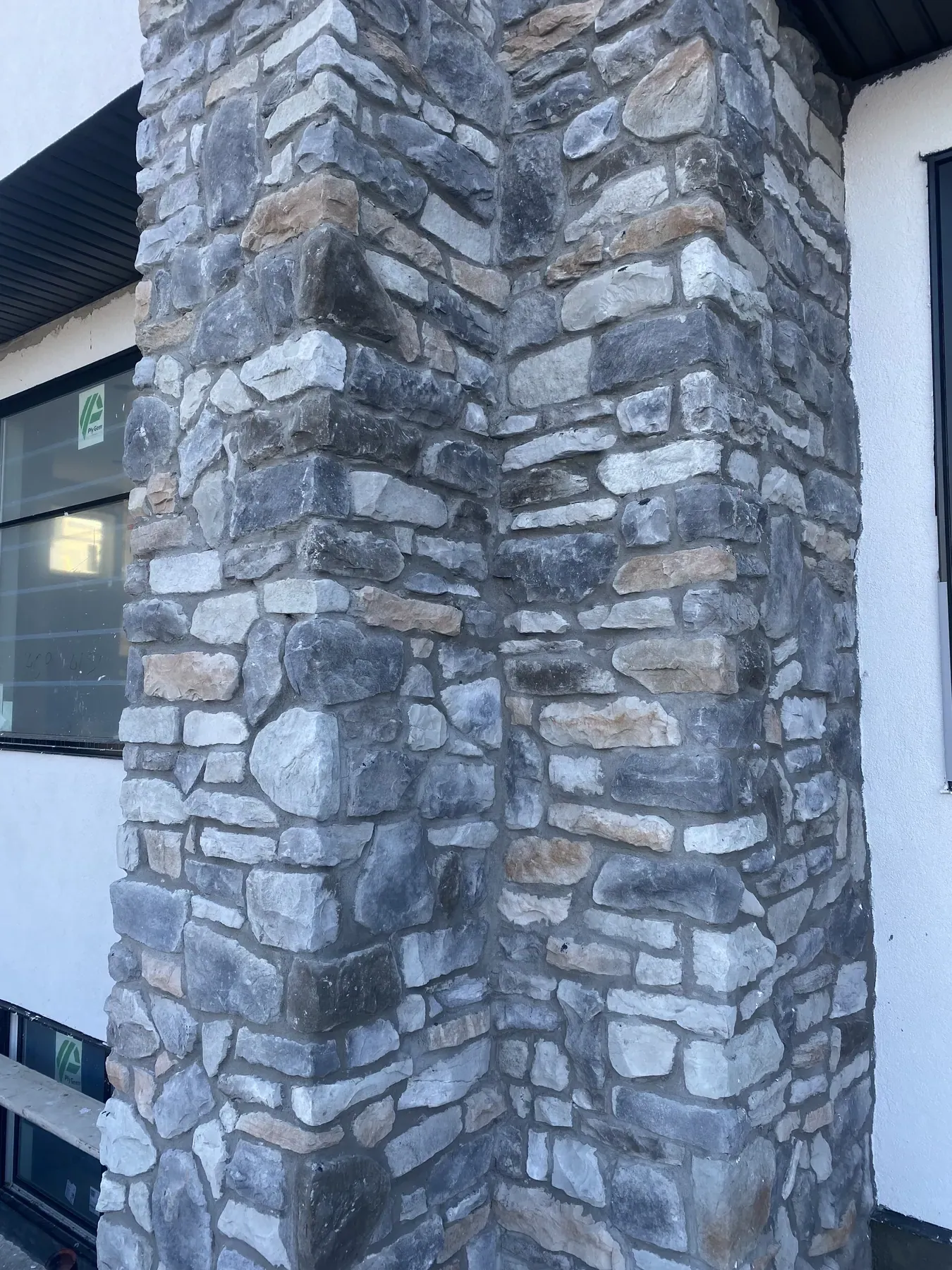
The choice comes down to look, weight and cost, because both types install the same way. Weight affects how the lath is fastened: the MVMA guide sets fastening tables by total cladding weight, with categories at 11, 18 and 25 lb per square foot (about 54, 88 and 122 kg/m²) including the stone, setting bed, lath and scratch coat. On cost, the City of Calgary puts stone at 455% above standard vinyl siding, based on RSMeans 2020 data, which is one reason stone often appears as columns and skirting with stucco or EIFS above, as on the garage in the gallery.
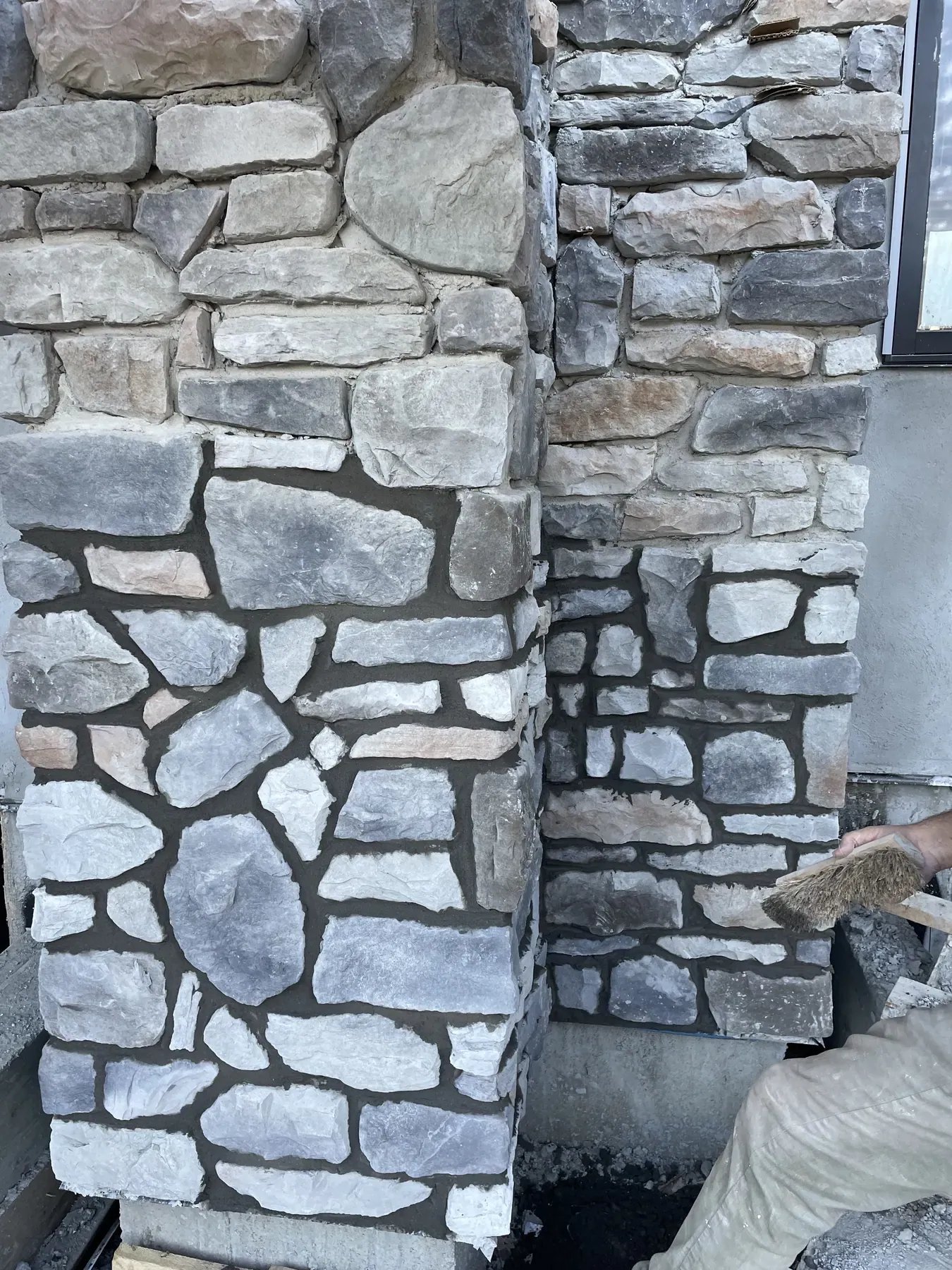
The MVMA guide is written for manufactured stone, and we use the same backing, lath and base details for natural thin stone unless the stone supplier specifies otherwise. The guide calls for two layers of water-resistive barrier where the code requires them, or one layer where a rainscreen drainage space is included. Lath must be self-furring metal lath of at least 2.5 lb/yd² or another listed type, fastened every 7 in (178 mm) vertically at each stud, with studs no more than 16 in (406 mm) apart and fasteners reaching at least 3/4 in (19 mm) into wood framing. Then comes the nominal 1/2 in (13 mm) scratch coat. On grouted installations like the column above, the guide sets a minimum nominal mortar joint of 1/4 in (6.4 mm) around each stone.
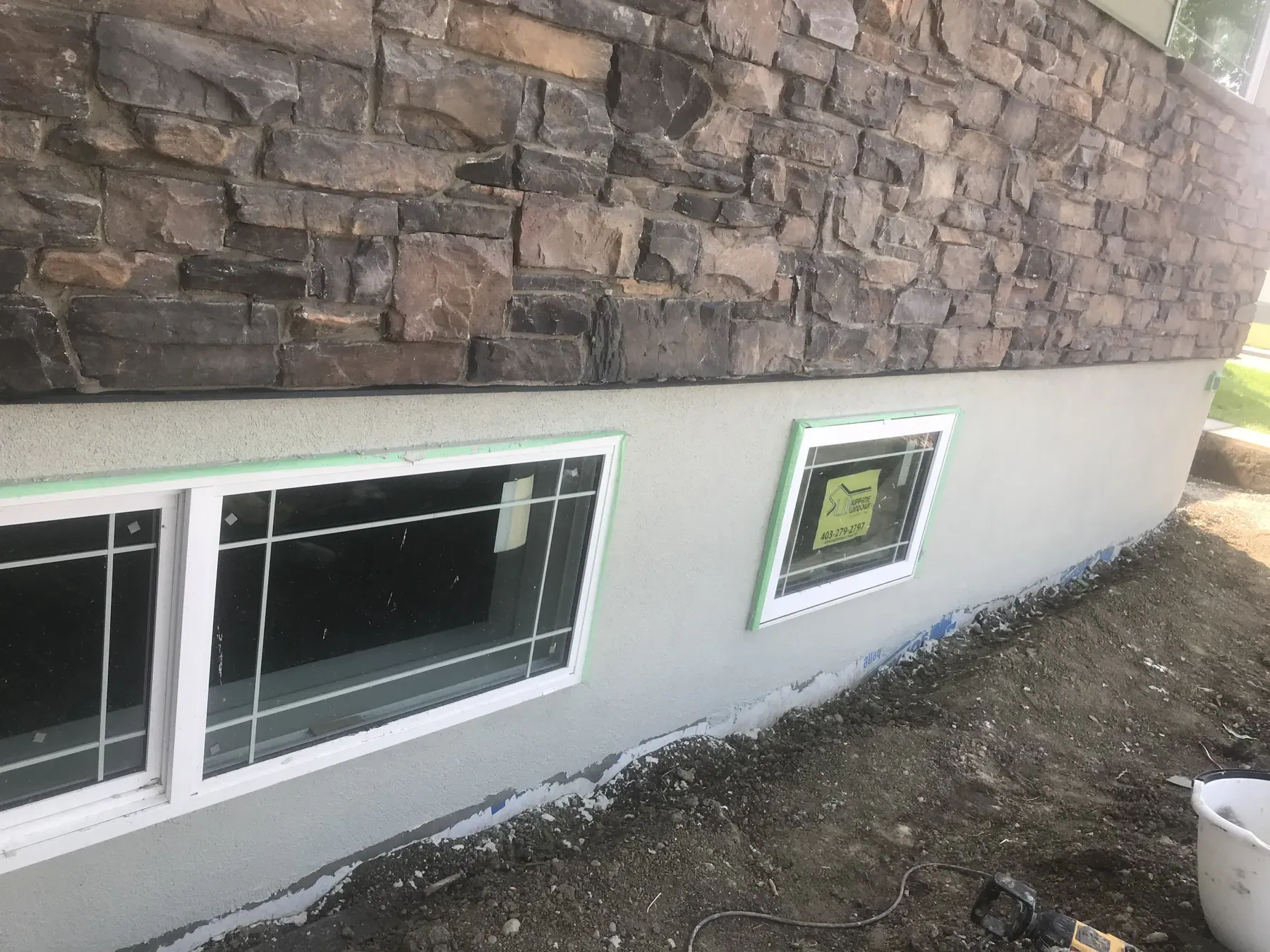
Where stone skirting meets stucco or siding above it, the building code requires flashing at that horizontal junction unless the upper cladding laps over the lower by at least 25 mm (1 in). We cap the stone with a sill or flashing that slopes outward so water running down the wall does not get behind the stone.
Interior feature walls, like the fireplace wall in the gallery, are not exposed to rain. For interior applications and moisture-sensitive substrates, the MVMA guide recommends a single layer of water-resistive barrier. Around a fireplace, clearances and backing materials come from the fireplace manufacturer’s installation manual.
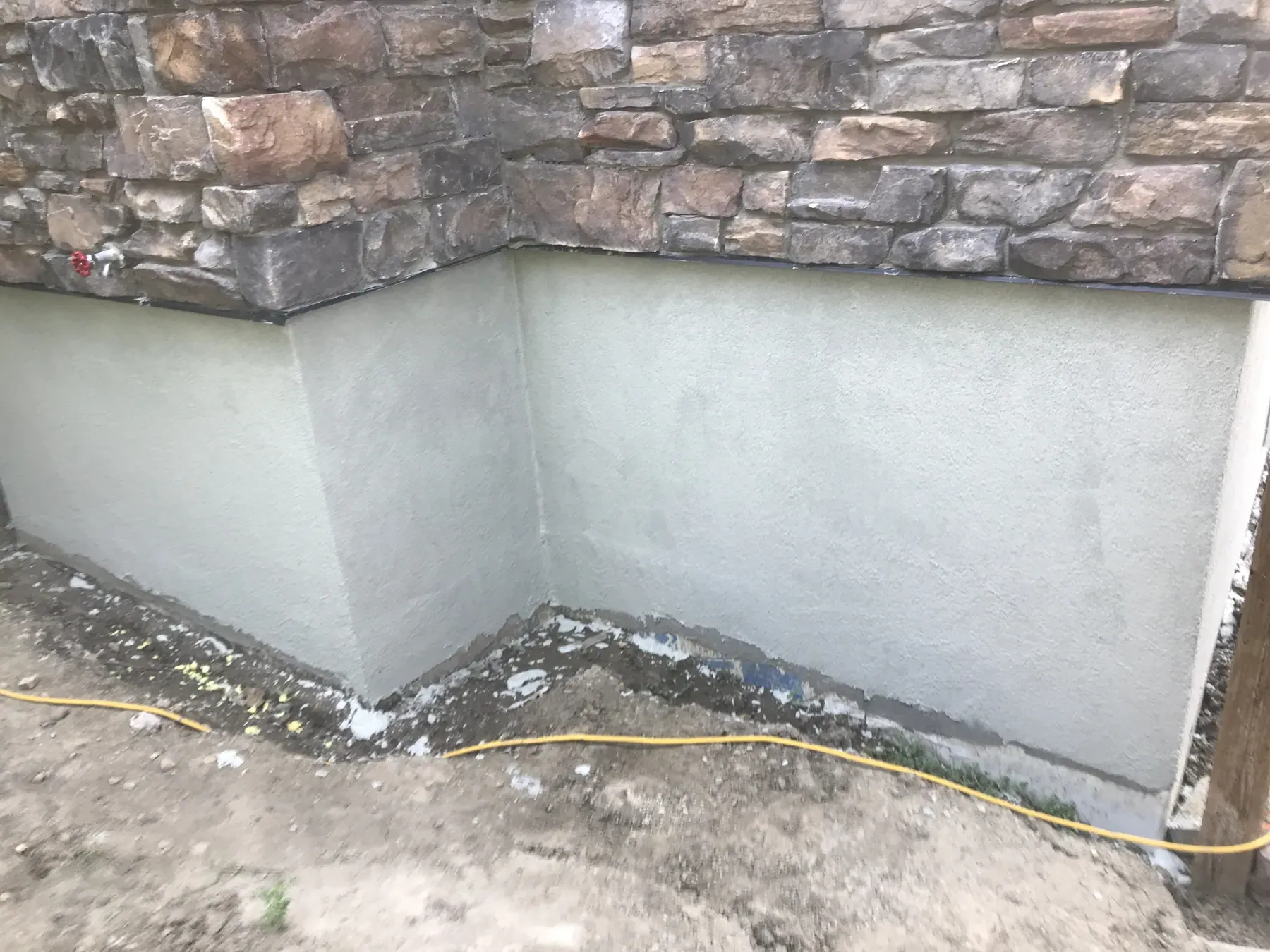
On frame walls we set the weep screed or base flashing at least 4 in (102 mm) above grade, and at least 2 in (51 mm) above paved surfaces, as the MVMA guide specifies. Over concrete or masonry backing the guide allows 2 in from grade. Below the stone, we parge the exposed foundation so the wall reads as one finished surface down to the ground.
The MVMA guide says to protect the work from temperatures below 4°C (40°F) during and immediately after installation. It does not recommend anti-freeze admixtures and does not permit calcium chloride accelerators, and stone with visible frozen moisture must not be installed. In cold months we enclose and heat the work or schedule it for spring. We also keep the bottom of the stone clear of walks and driveways where de-icing salt collects, because the guide warns salts can discolour or damage the veneer.
05 · In short
Stone veneer in Calgary lasts when it sits on a proper barrier, lath and about 25 mm (1 in) of well-cured mortar, and stops at least 102 mm (4 in) above grade with parging below. Sela Developments installs natural thin stone and manufactured stone veneer on columns, skirting, accent walls and interior fireplace walls, following the MVMA installation guide.
If you want insulation and a lighter finish instead, compare stone with EIFS. To see how stone fits a full recladding, read about exterior renovations in Calgary. When you are ready, send us photos and rough measurements.
Last reviewed October 22, 2026 by the Sela Developments team. See our editorial policy for how we write and check these pages.
On the job
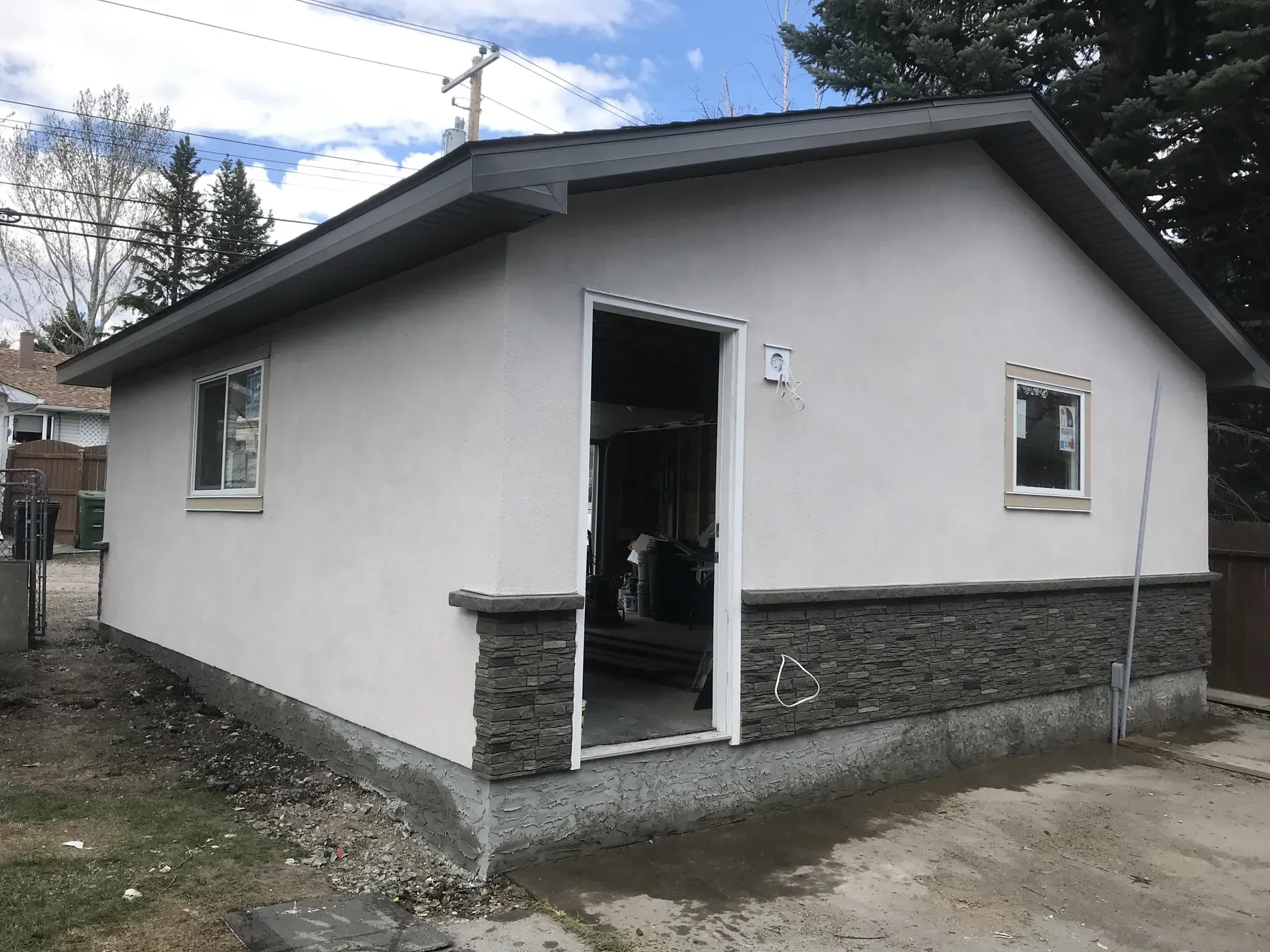
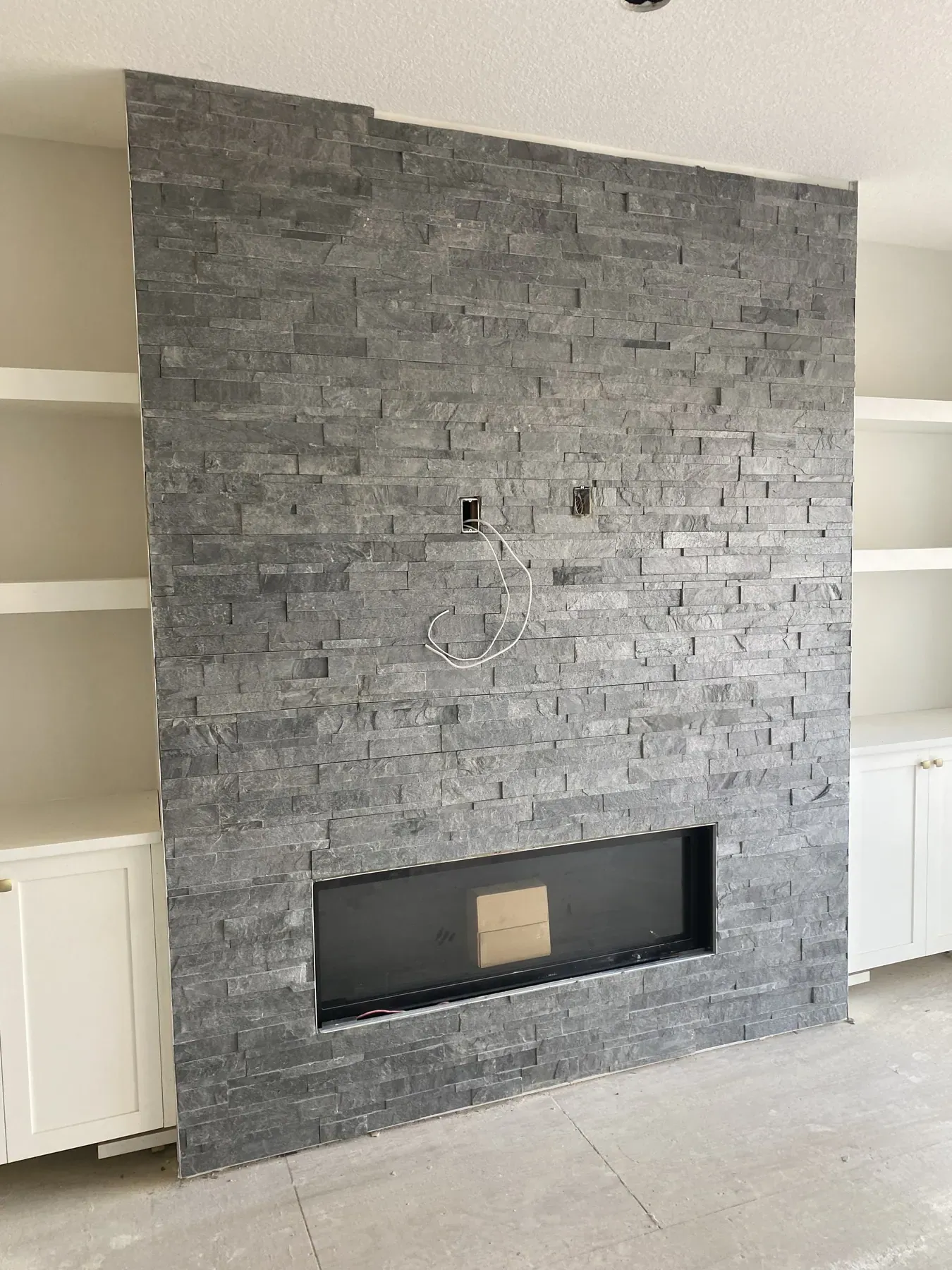
Natural thin stone is real quarried stone cut thin so it can be bonded to a wall. Manufactured stone is a cast concrete product moulded and coloured to look like stone. Both go on the same way, over a water-resistive barrier, metal lath and a mortar scratch coat. They differ in look, weight and price, so compare samples of both against your other cladding before choosing.
The Masonry Veneer Manufacturers Association guide says weep screeds and base flashings on frame walls should sit at least 4 in (102 mm) above grade and at least 2 in (51 mm) above paved surfaces. Over concrete or masonry backing, 2 in from grade is allowed. Below the stone, the exposed foundation is parged.
Only with protection. The MVMA guide says to protect the work from temperatures below 4°C (40°F) during and right after installation, does not recommend anti-freeze admixtures, does not permit calcium chloride accelerators, and says stone with visible frozen moisture must not be installed. In a Calgary winter that means heated hoarding or waiting for spring.
Yes. Interior stacked stone feature walls go on over a suitable backing with lath and mortar or the stone maker's adhesive system. The MVMA guide recommends a single layer of water-resistive barrier for interior applications. Clearances around the firebox follow the fireplace manufacturer's installation manual, so we work from that manual before the wall is framed.
Common causes include water trapped behind the stone with no way out at the bottom, stone set too close to grade or paving, and de-icing salts, which the MVMA guide warns can discolour or damage the veneer. The City of Calgary notes stone is susceptible to cracks in freeze-thaw cycles. We check the base detail and drainage before we patch anything.
Send photos of the wall, column or fireplace, rough measurements and the look you want. We visit, check the backing and the base detail, and quote the stone, lath, mortar and parging in writing.