Skip to content
Sela Developments

Commercial Contractor in Calgary

Sela Developments is a commercial contractor in Calgary, Alberta. Commercial contractors in Calgary build and renovate buildings that businesses, landlords, condo boards and congregations own. Our work covers tenant improvements, storefront and restaurant exteriors, church renovations, multi-family envelope and window replacement, and stucco and EIFS repair on buildings that stay open during the job. We hold the contract or act as construction manager, apply for the City of Calgary permits, phase the trades around your tenants and hours, and answer for the finished result.

Project types
Tenant improvements, storefronts, institutional, multi-family
Envelope scopes
Stucco, EIFS, stone, windows and membranes
Delivery methods
Fixed price general contract or construction management
City permit time, interior alterations
Typically 21 to 49 days (City of Calgary)
Prepaid contracting licence
Not required for commercial buildings in Alberta
WCB Alberta
[Account no.]
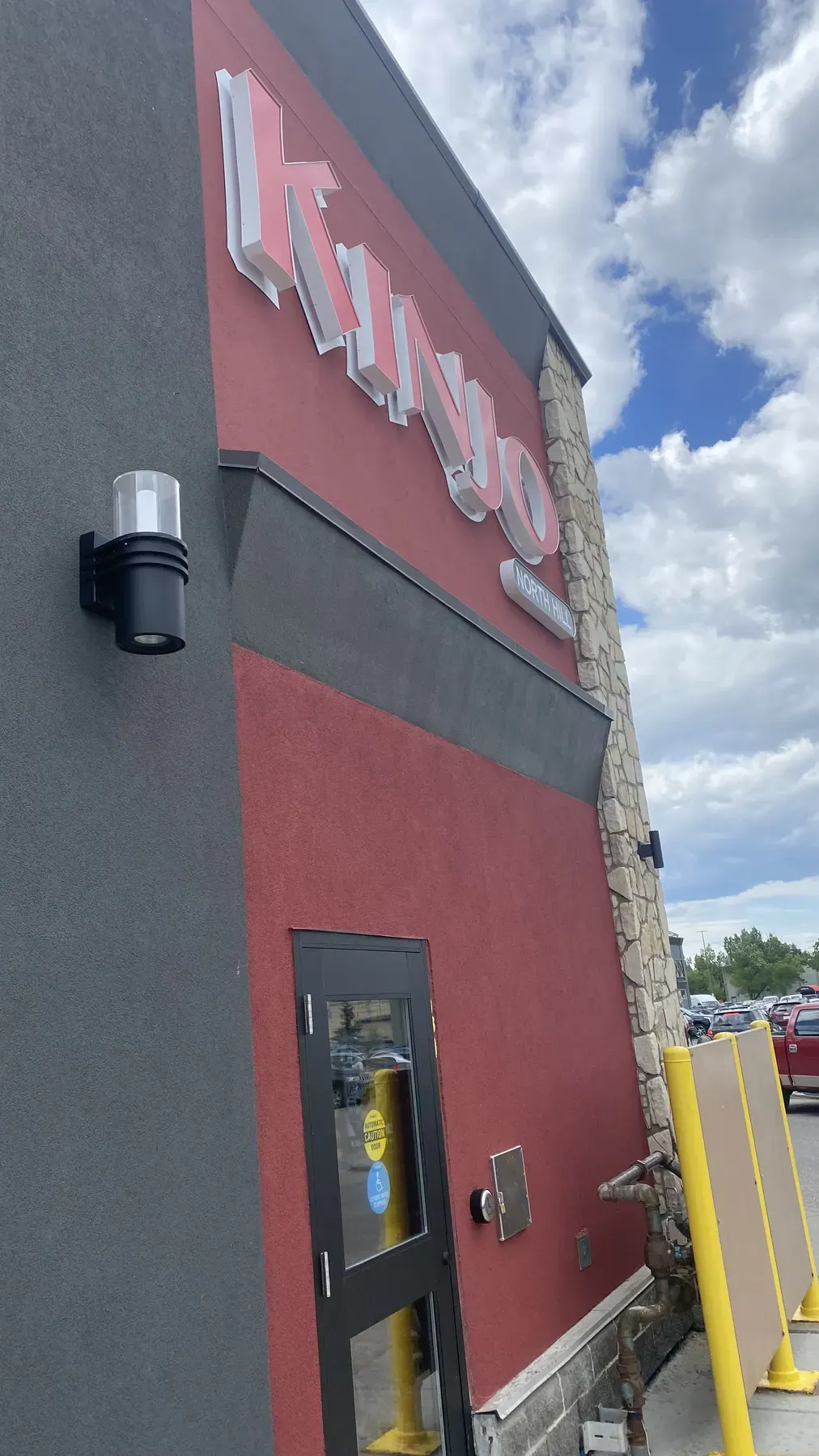
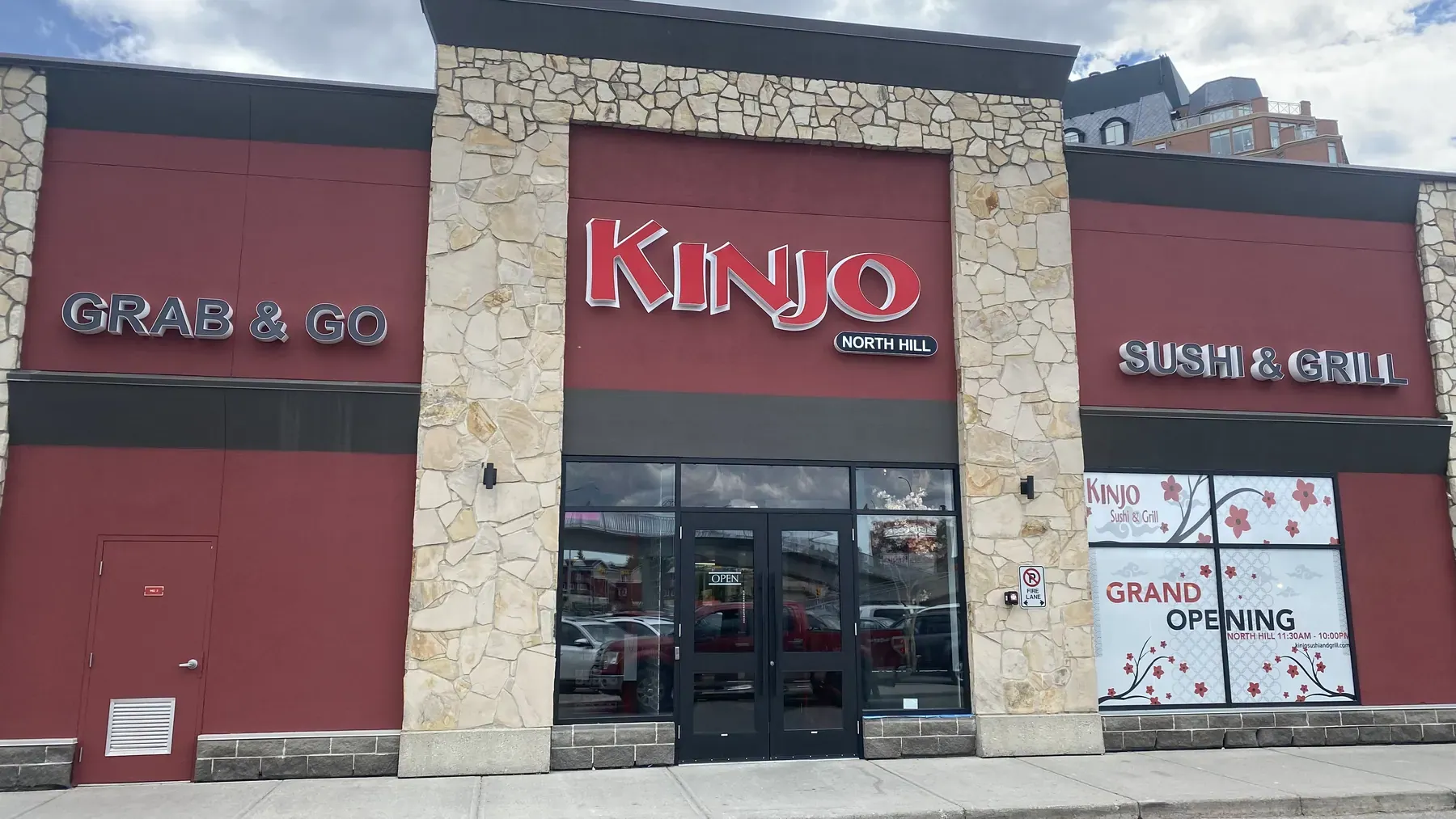
Restaurant storefront in a Calgary retail plaza with red stucco panels, a dark stucco band and natural stone pilasters around a glass entrance
Restaurant storefront exterior with stucco panels and stone pilasters, Calgary.

01 · Overview

What a commercial contractor does in Calgary

A commercial contractor holds the construction contract on a building used for business, rental, institutional or multi-family purposes. In Calgary that work is permitted by the City and built to the National Building Code, Alberta Edition, whose 2023 edition came into force on May 1, 2024. Our commercial work falls into six groups:

  1. Tenant improvements and commercial renovations. Interior alterations, demising walls and fit-outs for a new tenant.
  2. Storefront and restaurant exteriors. Stucco, stone pilasters, signage backing and entrance rebuilds.
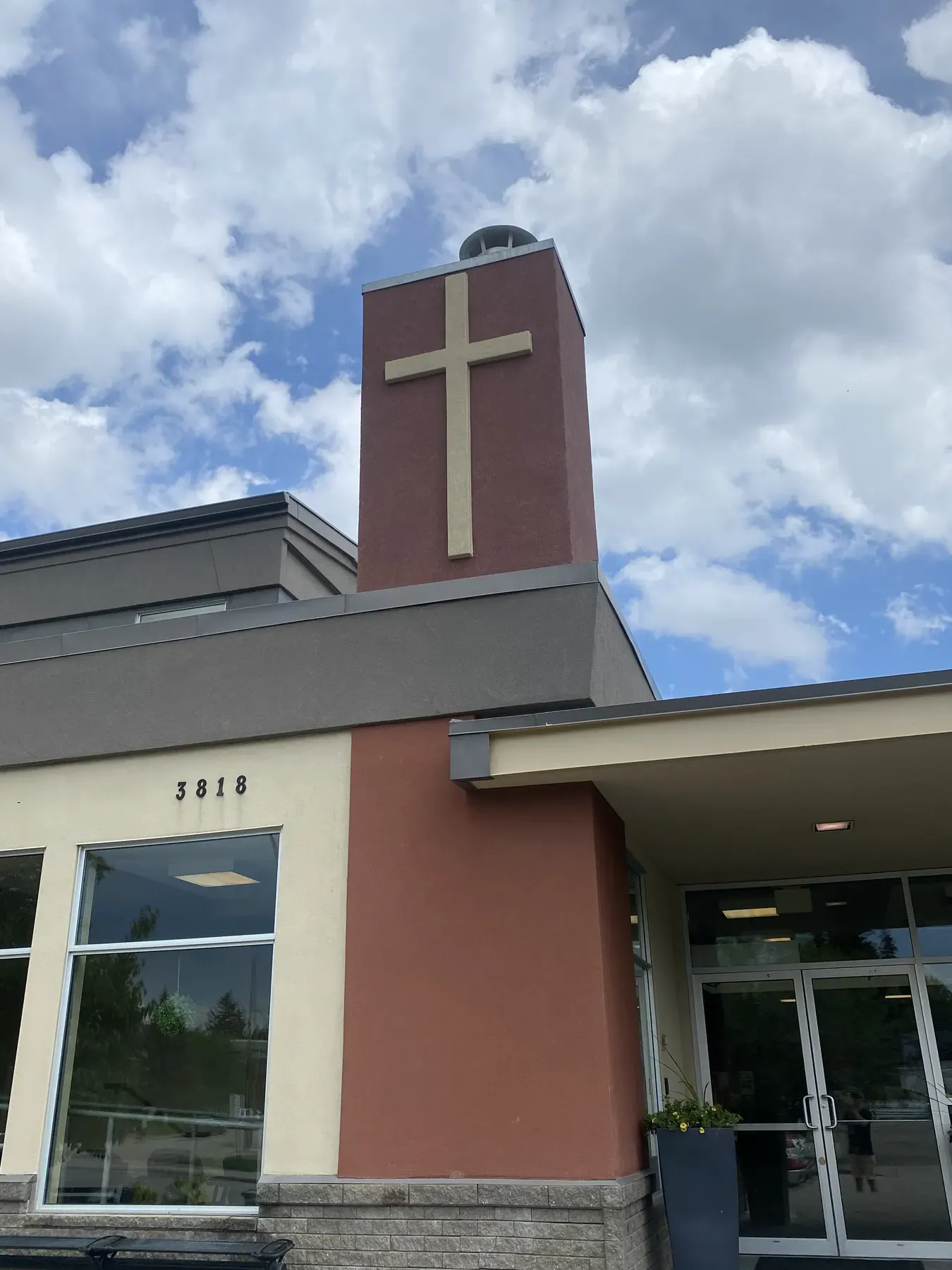
  3. Institutional buildings. Church exteriors, towers and entrances.
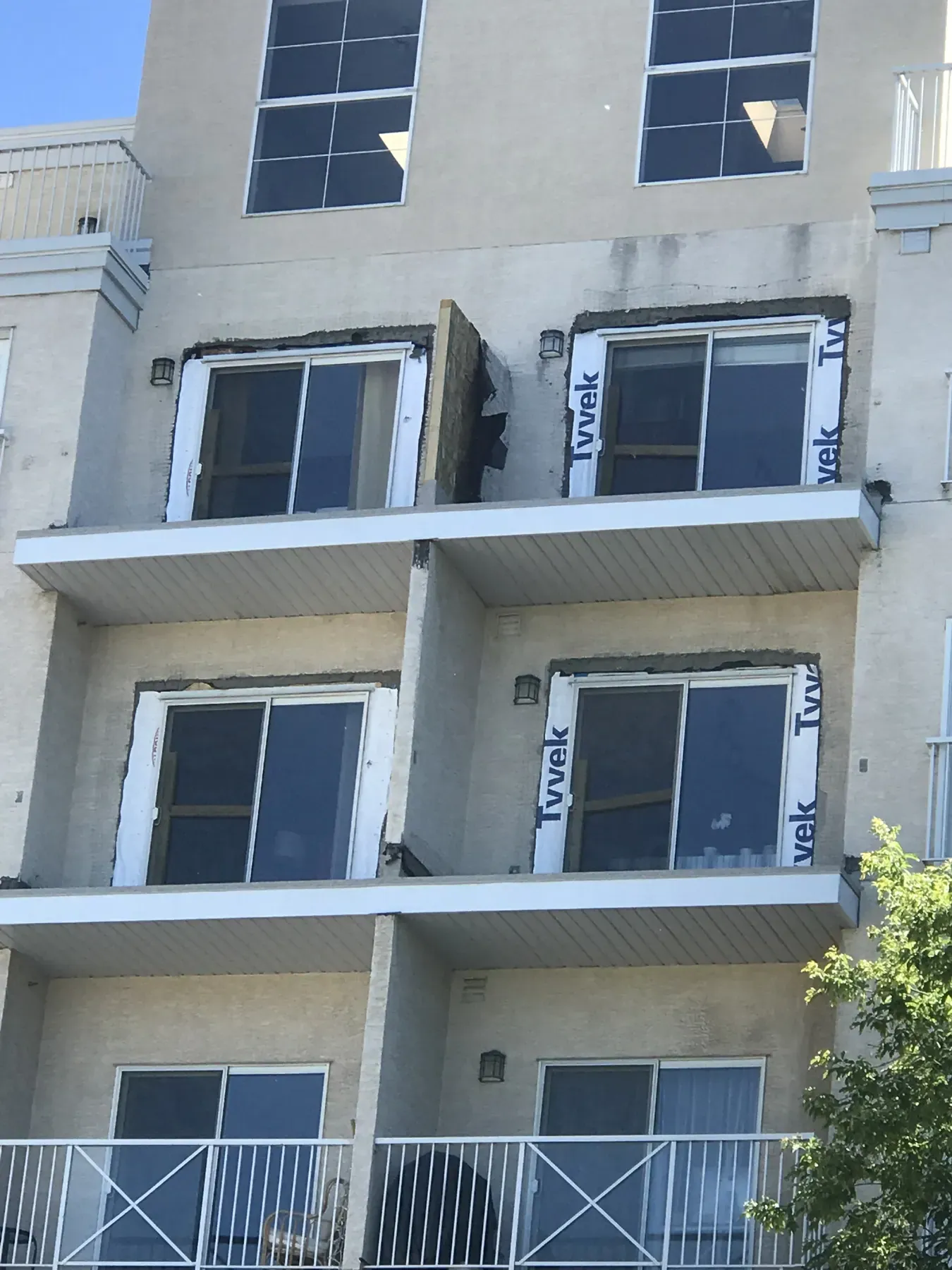
  4. Multi-family envelope work. Window and balcony door replacement, membranes and cladding on condo buildings.
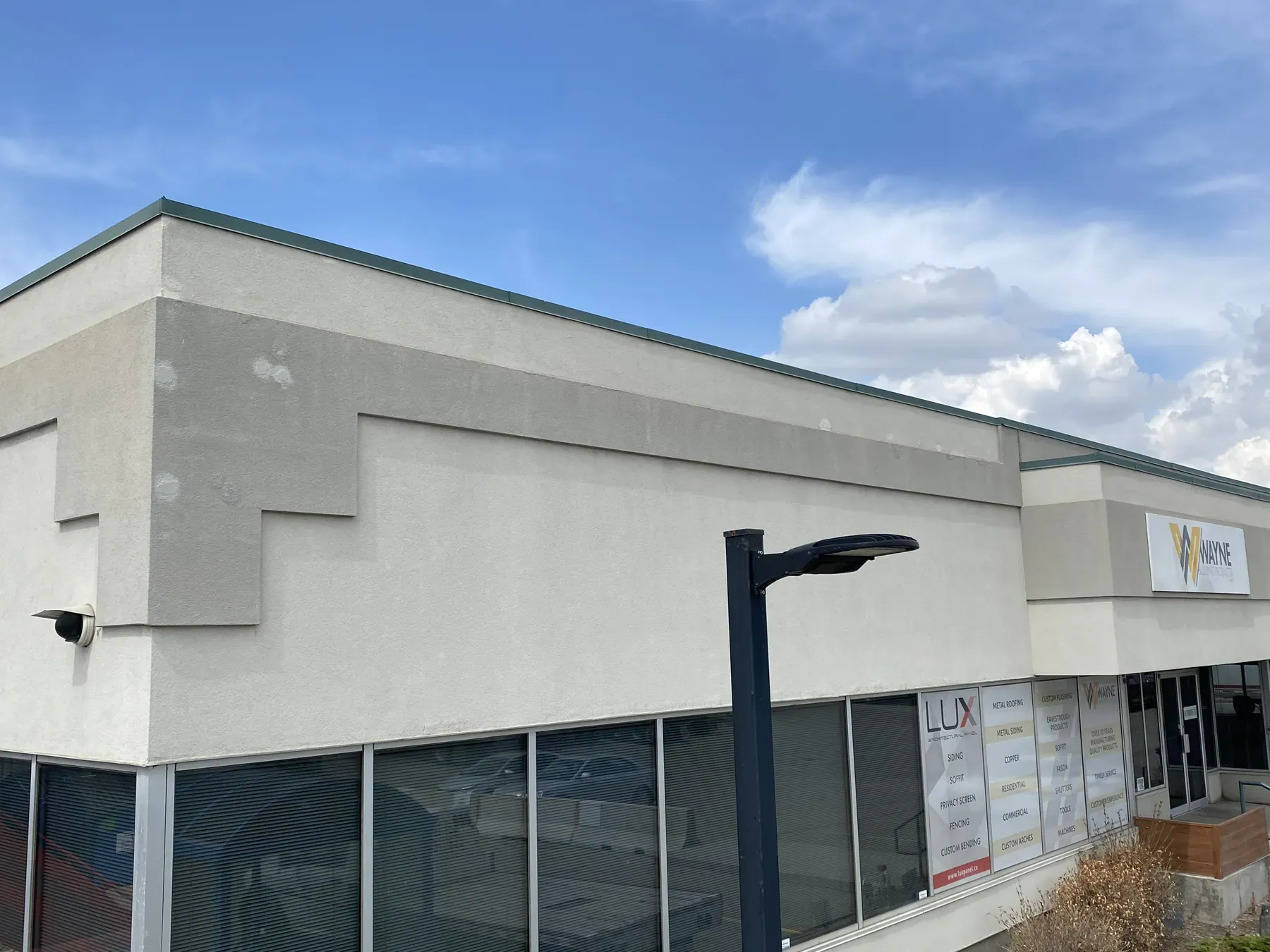
  5. Commercial stucco and EIFS repair. Patch, recoat and rebuild work on occupied buildings.
  6. Construction management. Running the trade packages for an owner who wants control over each contract.

Most of these jobs need permits. The City of Calgary requires a building permit for alterations, repair or demolition of structural and non-structural walls in a commercial space, and for a change of business that creates a new building code classification or occupant load. A development permit is also needed when the use changes, or when exterior changes do not match the approved development permit.

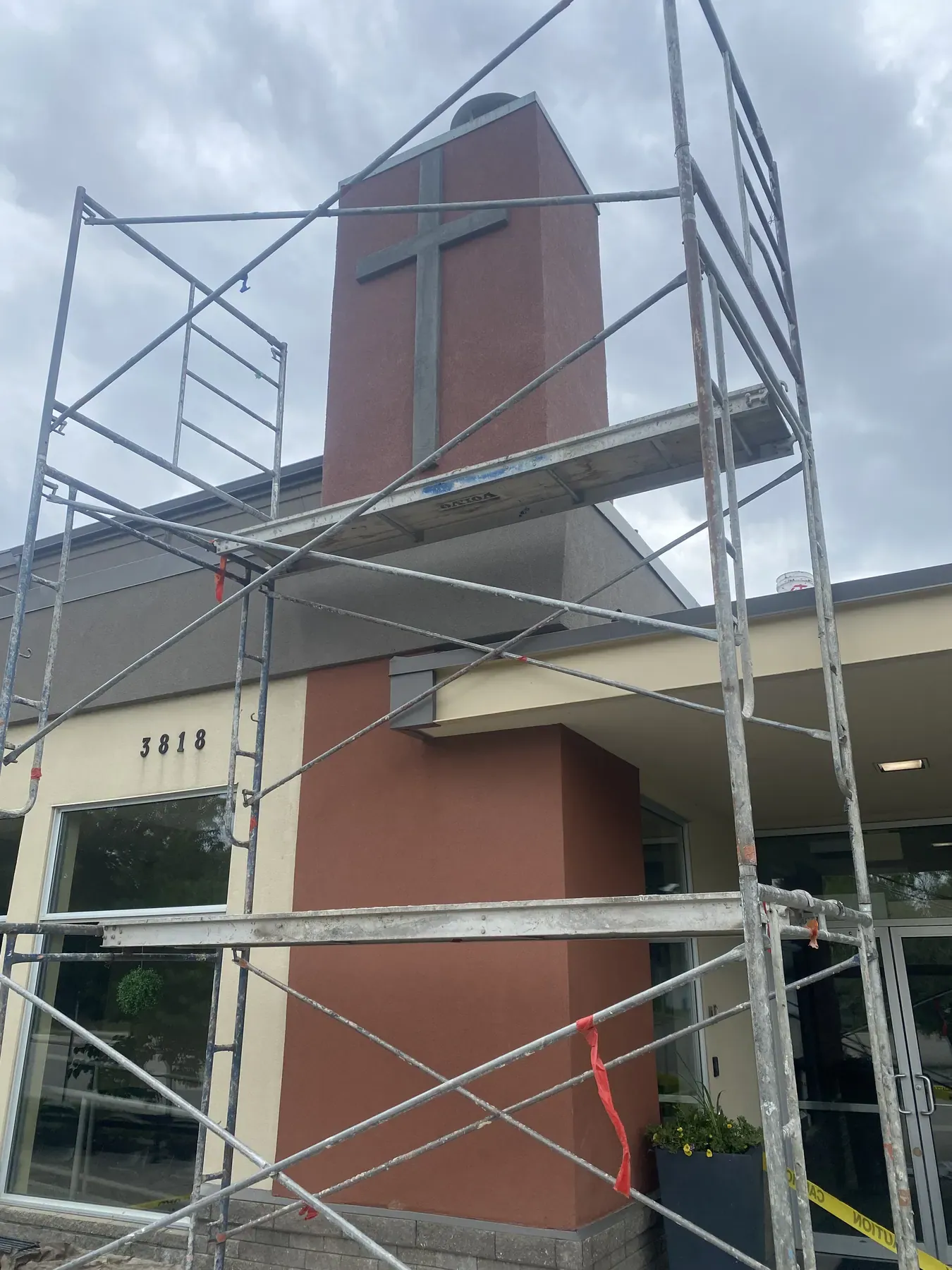
Church entrance and bell tower with a red stucco tower, cream stucco walls and a stone base after an exterior renovation

02 · Before you start

What makes commercial construction in Calgary harder than a house

The trades are similar. The conditions around them are not.

01

The building has to stay open during the work

A restaurant still serves lunch. A church still holds services. Condo owners still need their front door. Every day of work happens next to the public, so access, noise, dust and fire exits shape the schedule. On a condo, crews work outside occupied suites, so residents need notice before anyone is on their balcony.
How we handle it
02

Permits and drawings take longer

The City of Calgary says a building permit for interior commercial renovations typically takes 21 to 49 days. A change of use that is discretionary or needs a relaxation adds a development permit, with 10 to 12 weeks to decision and appeal. The City also notes that an architect or professional engineer may need to design and stamp the work.

How we handle it
03

Envelope failures are bigger and higher up

Parapets, cornices and fourth floor windows need scaffolding, hoarding or a boom lift before anyone can repair them. Calgary weather tests that envelope hard: the August 5, 2024 hailstorm caused nearly $2.8 billion in insured damage, according to the Insurance Bureau of Canada.

How we handle it
04

Several parties sign off on the same work

A landlord, a tenant, a property manager, a condo board, an insurer and the City can all have a say. A tenant improvement often needs the landlord to approve the drawings before the City permit is even applied for. When nobody owns the approvals, work waits on email.

How we handle it
05

The delivery method decides who carries the cost risk

A fixed price contract puts the risk of overruns on the contractor. Construction management gives the owner more control and more of the risk. Picking the wrong one for the stage of design causes most budget fights.

How we handle it

03 · Key insight

On an occupied building, access and phasing decide the job

On a commercial project, the materials are rarely the hard part. The cost and the schedule are set by how the crew reaches the wall and how the work is split around the people using the building. Scaffolding, hoarding, covered walkways, after-hours shifts and zone-by-zone handovers are the job.

So the first thing we price is not the stucco or the windows. It is the access plan and the phasing plan. Once those are agreed, the rest of the scope can be priced with confidence.

This is also why two quotes for the same stucco repair can be far apart. One includes engineered scaffolding, hoarding and night shifts. The other assumes a ladder and an empty sidewalk. Ask every bidder to show access and phasing as their own lines, then compare.

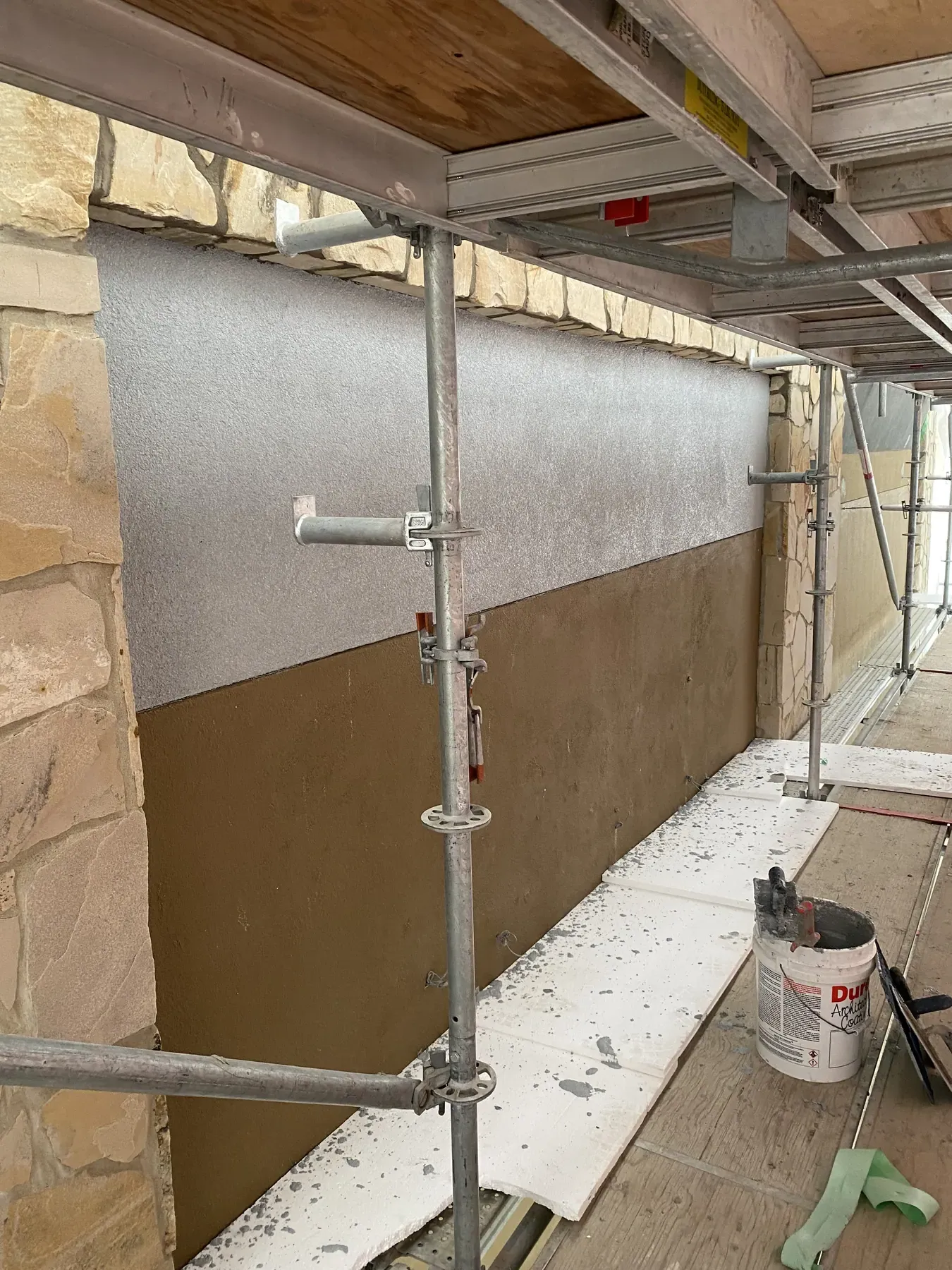
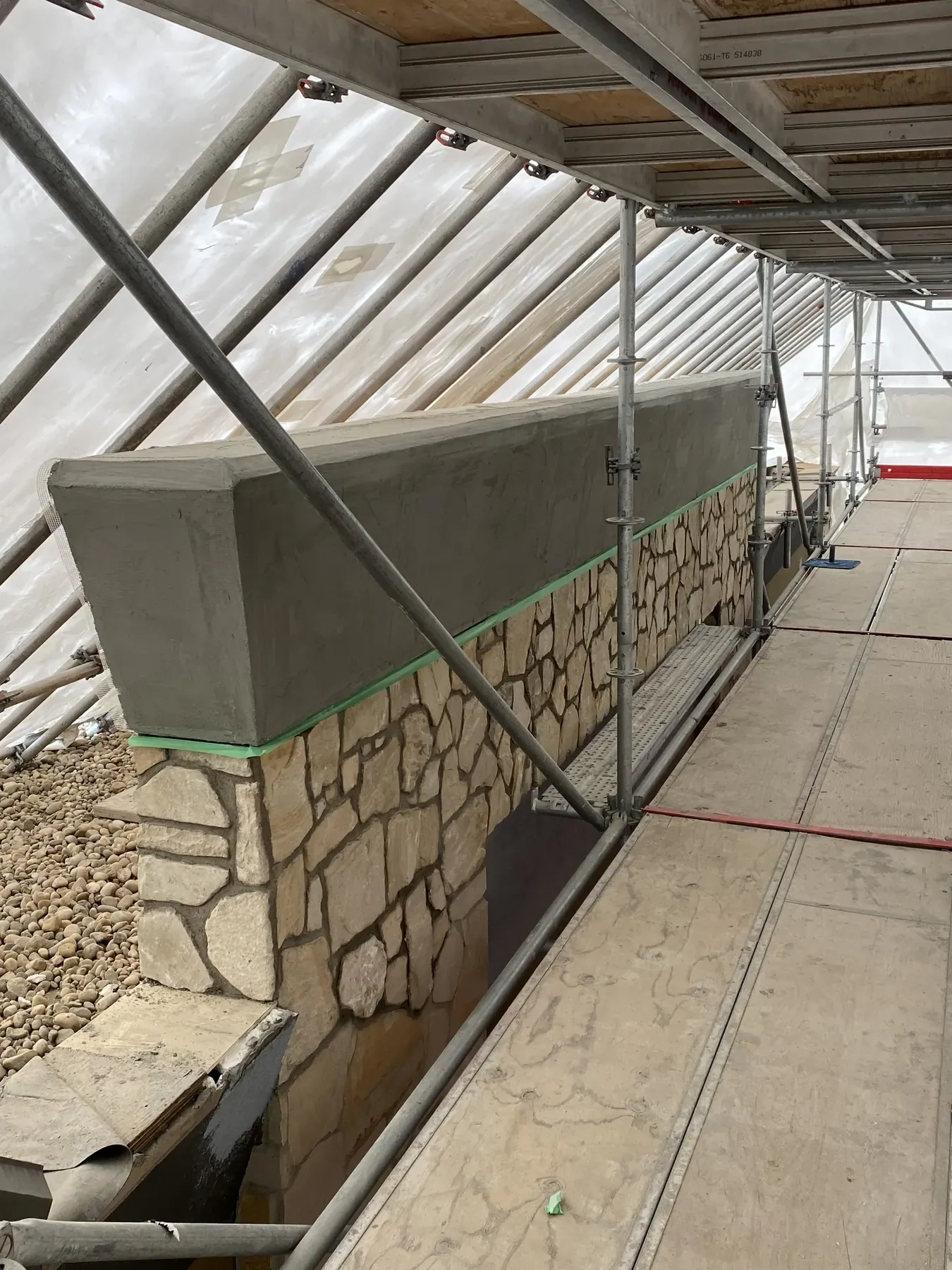
Stone-clad parapet with a new cap under scaffolding and hoarding on a commercial building

04 · How we work

How we run commercial projects in Calgary

  1. Answers 01The building has to stay open during the work

    We phase the work around your tenants and hours

    We map the building into zones, agree the working hours for each one, and put the plan in the contract. Entrances get covered walkways, exits stay clear, and each zone is cleaned and handed back before the next opens. Tenants and residents get written notice before work starts at their unit or frontage.

  2. Answers 02Permits and drawings take longer

    We confirm the permit path and drawings before pricing

    During the walk-through we check whether the scope needs a building permit, a development permit or stamped drawings. If a consultant is needed, we say so up front, so the permit timeline is in the schedule from day one. Permit fees, the City’s permit deposit and any consultant fees appear as separate lines in the quote.

  3. Answers 03Envelope failures are bigger and higher up

    We repair the envelope from the substrate out

    On commercial stucco and EIFS repairs we cut back to sound material, check the sheathing, flashings and weather barrier, and photograph each layer before it is covered. Window replacement on multi-family buildings gets membranes and sill flashing before the new unit goes in. On church towers and parapets, frame scaffolding goes up with a hoarded walkway at grade so the public route stays open.

  4. Answers 04Several parties sign off on the same work

    We report to one decision maker and copy the rest

    You name one contact on the owner side. Every change goes to that person as a written change order with the price and schedule impact, and the landlord, tenant or board gets a copy. Site reports with photos go out at each milestone, so the owner or board has a record for its files.

  5. Answers 05The delivery method decides who carries the cost risk

    We match the contract to the stage of design

    When drawings are complete, a fixed price general contract usually fits. When design is still moving or the work is phased over seasons, construction management gives you control of each trade package for a set fee.

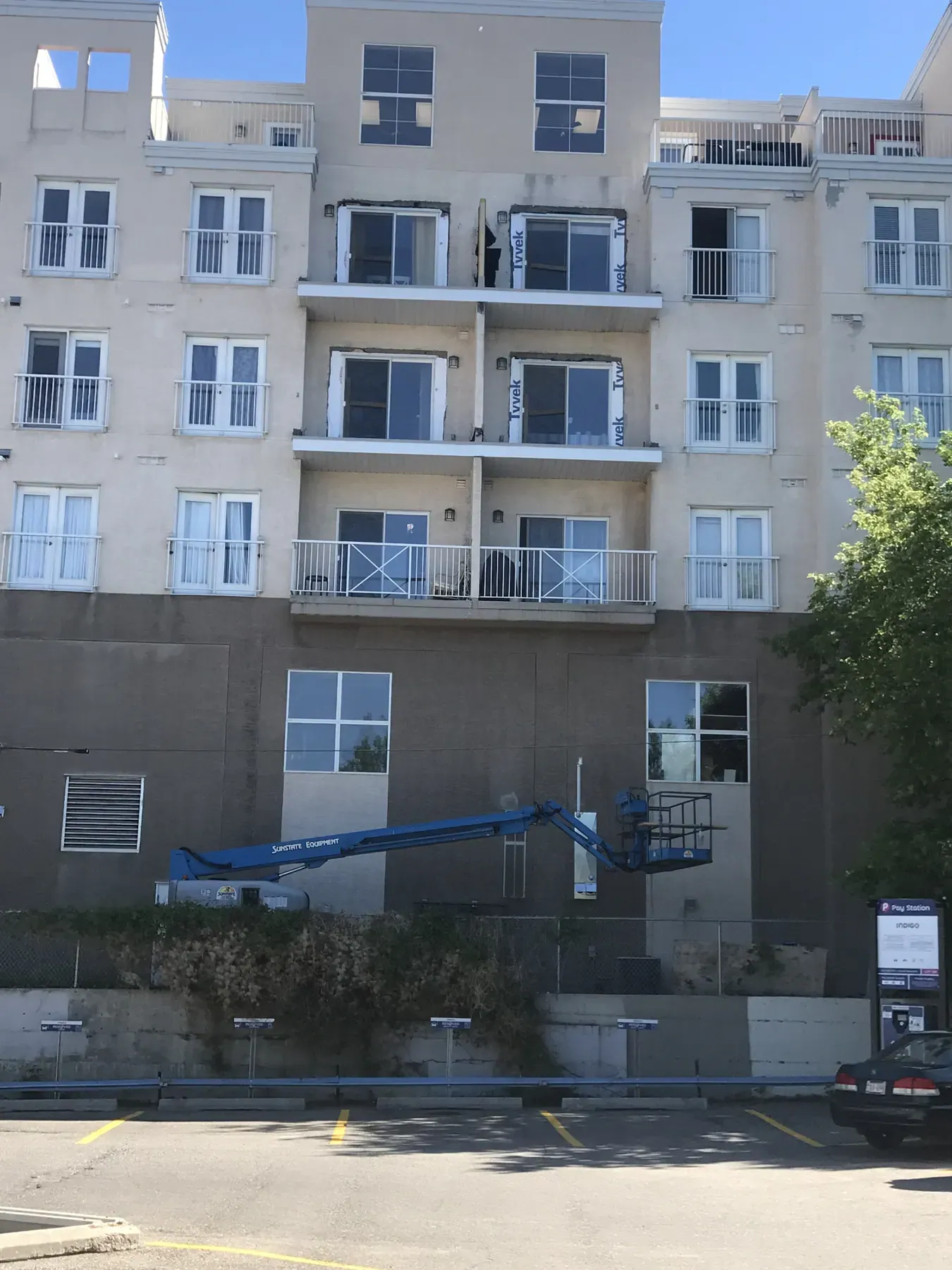
    Multi-storey condo building with new windows and balcony doors being installed, and a boom lift at the base

05 · In short

Commercial contracting in Calgary with one accountable team

Sela Developments is a commercial contractor in Calgary for tenant improvements, storefront and restaurant exteriors, church and institutional buildings, multi-family envelope and window replacement, and stucco and EIFS repair on buildings that stay open. We plan access and phasing first, get the permits, and run the trades as general contractor or construction manager.

Alberta’s prepaid contracting licence does not apply to contracts for commercial buildings. The checks that do apply are a City of Calgary business licence, WCB Alberta coverage ([Account no.]) and liability insurance ([Amount]).

If your project is a home rather than a business property, see residential general contracting. For envelope scopes, read about exterior renovations. For budgets and vetting, see what a general contractor costs in Calgary and how to hire a general contractor, or go back to general contracting in Calgary. Browse completed projects, then send us your building to book a walk-through.

Sources

6 cited

Last reviewed October 22, 2026 by the Sela Developments team. See our editorial policy for how we write and check these pages.

On the job

FAQ

Questions we get asked

Short answers to what owners ask us most. Something else? Ask us directly.

Do I need a building permit for a tenant improvement in Calgary?

Usually, yes. The City of Calgary requires a building permit for alterations, repair or demolition of structural and non-structural walls in a commercial space, and for a change of business that creates a new building code classification or occupant load. Wholly cosmetic work such as painting or new furniture does not need one. The City says interior renovation permits typically take 21 to 49 days.

How much is a commercial building permit in Calgary?

The City's fee calculator sets the commercial building permit rate at $10.14 per $1,000 of construction value, plus a $112 minimum processing fee and a 4% Safety Codes Council fee. Permits over $10,000 need a 25% deposit, capped at $10,000. A development permit for a permitted change of use is $190. The official rates are set in Building Permit Bylaw 64M94.

Can the building stay open while you work on it?

In most cases, yes. We split the job into zones, put up hoarding and covered walkways over entrances, keep exits and fire routes clear, and book noisy or dusty work outside business hours when tenants need that. Each zone is closed, cleaned and handed back before the next one opens. The phasing plan is agreed in writing before work starts.

What is the difference between a general contractor and a construction manager?

A general contractor gives one fixed price for a defined scope and carries the risk of its own costs. A construction manager is hired earlier, often during design, helps with budgets and sequencing, and tenders and manages the trade contracts for a fee. Construction management gives the owner more control and visibility, and also moves more of the cost risk to the owner.

Do commercial contractors in Alberta need a prepaid contracting licence?

No. Alberta's prepaid contracting licence covers residential work sold away from the contractor's place of business where money is taken before the work is done. Contracts for business or commercial buildings are exempt. A commercial contractor in Calgary still needs a City of Calgary business licence to get permits, and you should ask for proof of WCB coverage and liability insurance before signing.

Book a walk-through of your building

Send the address, how the building is occupied and a few photos. We walk the site, check what the permit will need and send a written scope with a phasing plan.