Skip to content
Sela Developments

Exterior Renovations in Calgary

An exterior renovation replaces or repairs the outside skin of a building, which means the cladding, trim and flashing and the weather barrier behind them. Sela Developments handles exterior renovations in Calgary from start to finish, including recladding in stucco, siding, EIFS or stone, foundation parging, flashing around new windows and doors, and hail damage repair priced against your insurance scope. We open the wall, check the membrane and flashing, fix what is behind the finish, then install the new cladding.

Cladding we install
Stucco, siding, EIFS, stone veneer
Building code
National Building Code, Alberta Edition 2023 (in force May 1, 2024)
Calgary climate (NBC Table C-2)
5000 degree-days, moisture index 0.4
Stucco clearance to ground
200 mm (8 in) minimum, except over concrete or masonry
City of Calgary permit trigger
Replacing siding with a different siding material
August 5, 2024 hailstorm
Nearly $2.8 billion in insured damage
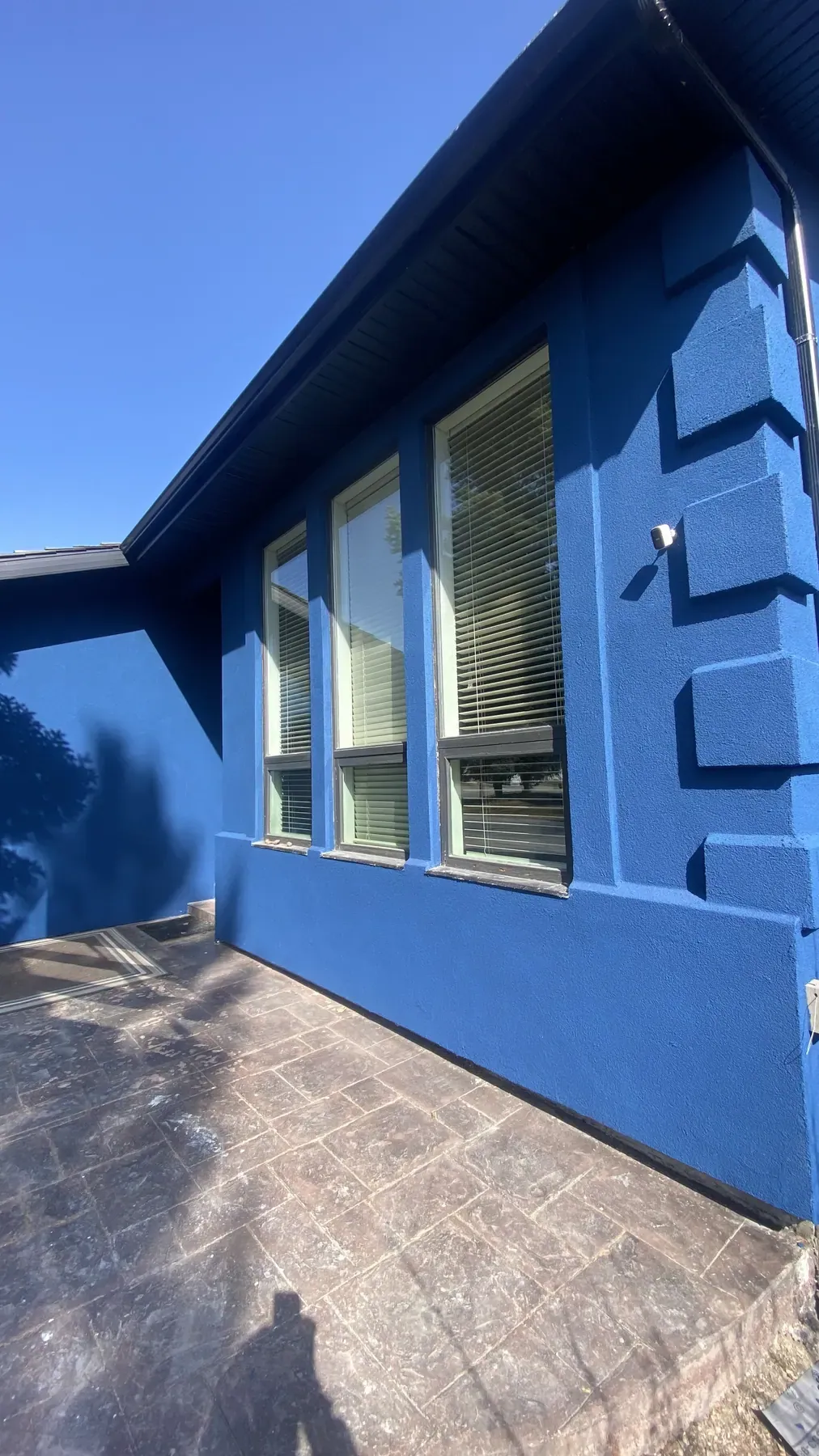
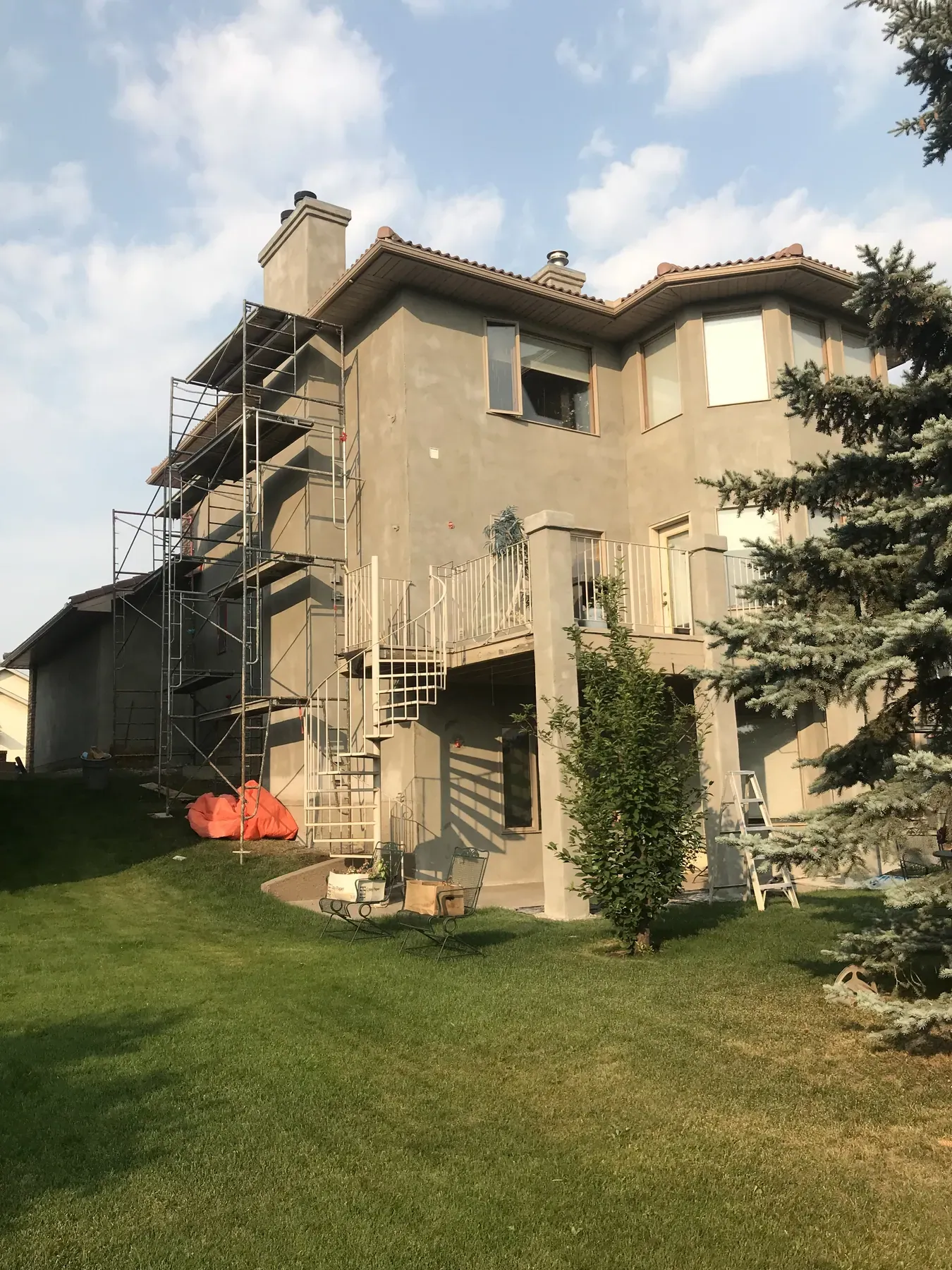
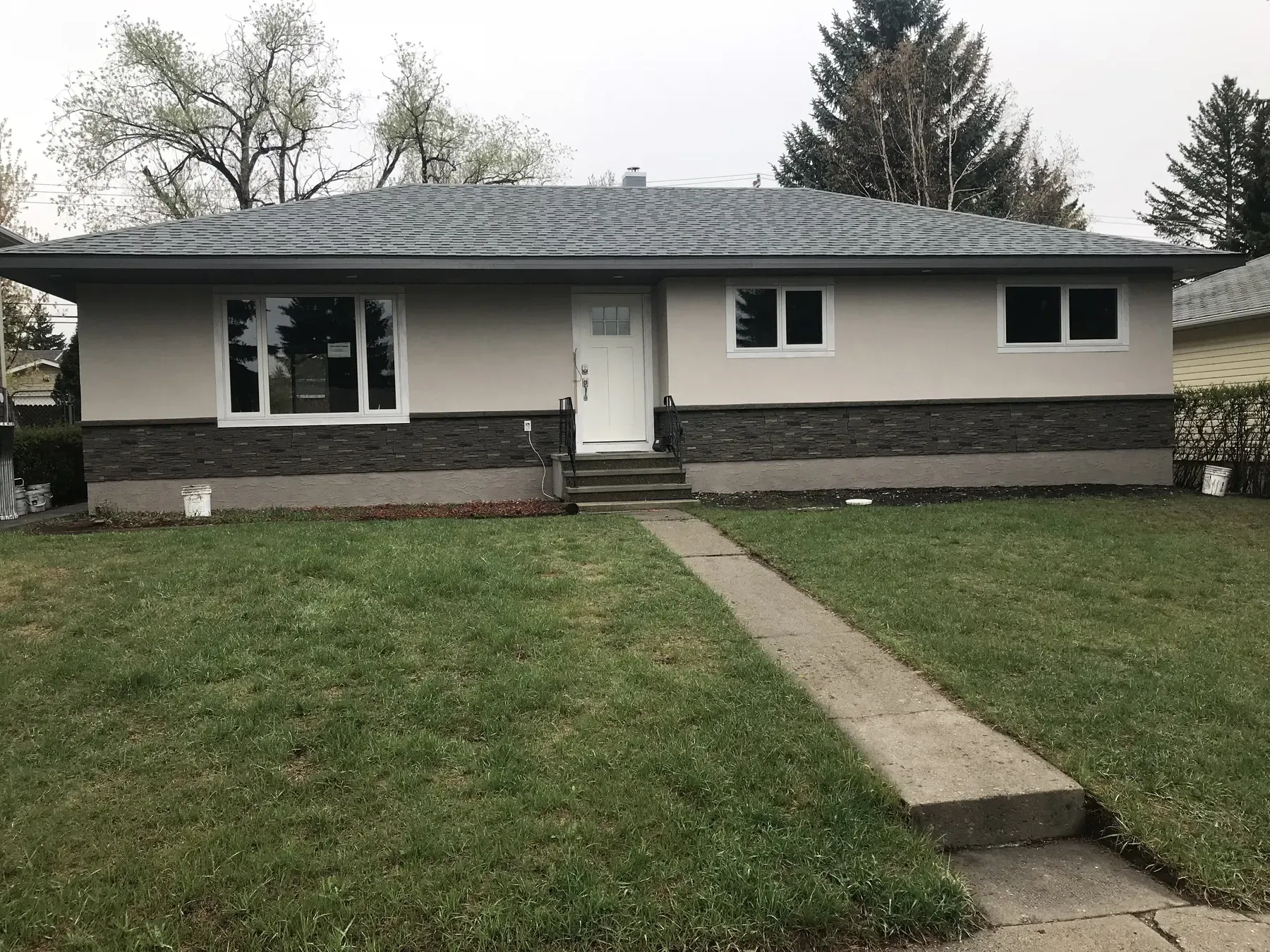
Calgary bungalow after an exterior renovation with light grey stucco, dark stacked stone skirting and white window trim
Bungalow reclad in stucco with a stone veneer skirt, Calgary.

01 · Overview

What an exterior renovation in Calgary includes

An exterior renovation is any project that repairs or replaces the outside skin of a building, from one damaged wall to a full recladding. The skin is more than the finish you see. It is the cladding, the trim and flashing around it, and the sheathing membrane behind it. On a typical Calgary exterior renovation, the work falls into six groups:

  1. Recladding. Removing old cladding and installing new stucco, siding, EIFS or stone veneer, alone or in combination.
  2. Foundation parging. A cement coat over the exposed concrete between grade and the cladding.
  3. Window and door replacement flashing. Membrane, sill flashing and head flashing around new openings, tied into the wall behind the cladding.
  4. Soffit, fascia and eavestrough coordination. Roof edges are finished in sequence with the walls so roof water is carried away from the new cladding.
  5. Hail damage repair. Cladding, trim and window damage documented, priced and repaired.
  6. Insurance-scope work. An itemized scope written so it can be compared with the adjuster’s estimate.

In Alberta this work is judged against the National Building Code, Alberta Edition 2023, which came into force on May 1, 2024. Section 9.27 covers cladding and Section 9.28 covers stucco on houses and small buildings.

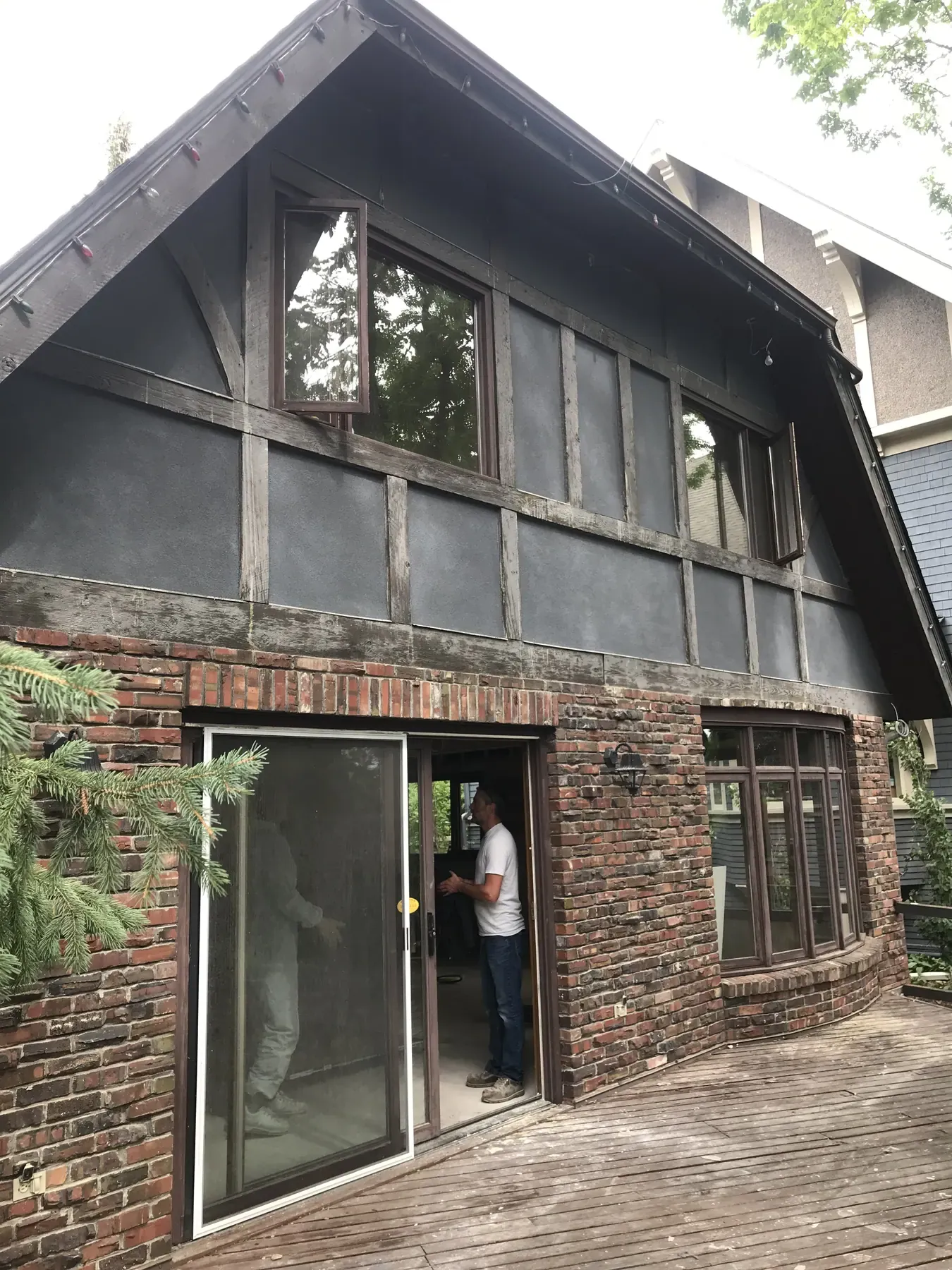
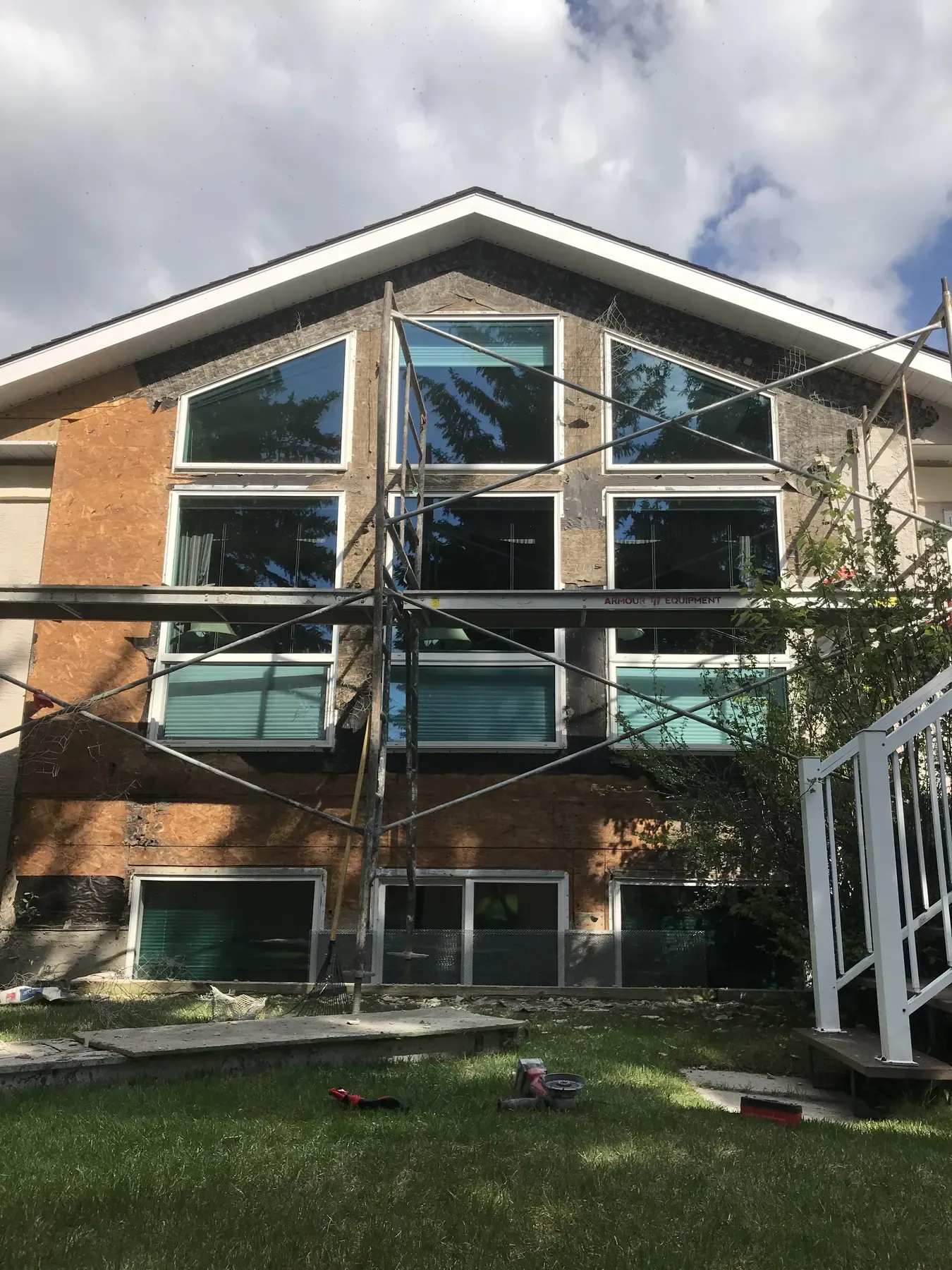
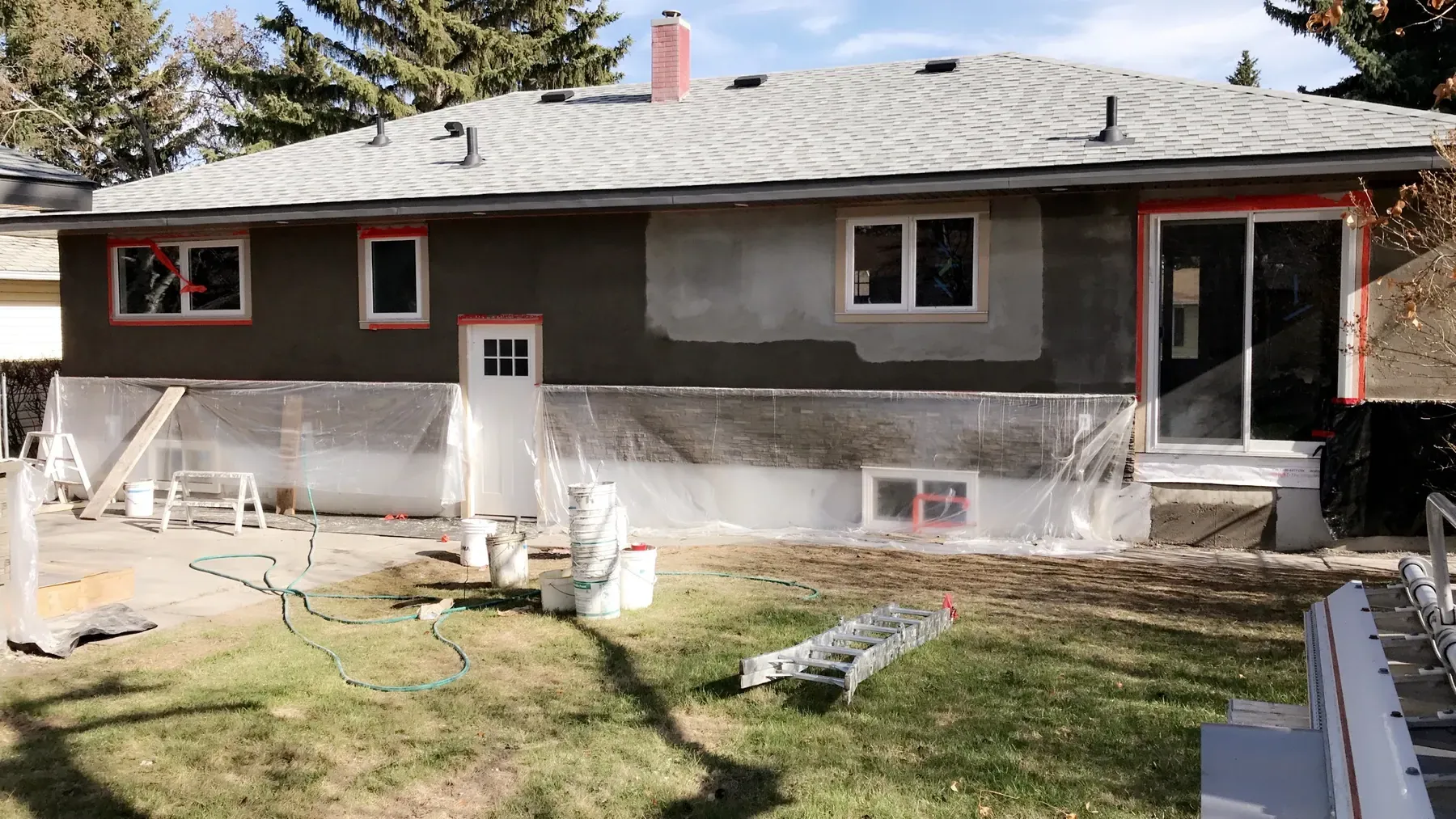
Rear of a Calgary bungalow mid-renovation, with red-taped window openings, partly patched stucco and plastic sheeting over the lower wall

02 · Before you start

What goes wrong with exterior renovations in Calgary

Four things decide whether new cladding stays sound: what happens to water that gets behind it, how the openings are flashed, how the material handles hail, and the weather it was installed in.

01

Water that gets behind the cladding

No cladding is perfectly watertight at its joints, fasteners and edges. The National Building Code treats the cladding as the first plane of protection and requires a second plane behind it that intercepts any rain or snow that gets past and drains it back outside. If that second plane is torn, missing or lapped the wrong way, water sits against the sheathing.

How we handle it
02

Flashing at windows, doors and roof lines

Openings and roof-to-wall junctions are the weak points in any wall. A new window installed without a sill flashing, or a roof that drains straight down a wall, will wet the framing no matter how good the finish looks.

How we handle it
03

Hail and impact damage

The City of Calgary describes the city as part of “hail alley”, the area that sees the most hail in Canada. The August 5, 2024 hailstorm caused nearly $2.8 billion in insured damage and affected almost one in five Calgary homes, according to the Insurance Bureau of Canada. Cladding choice decides how much of a wall needs replacing after the next storm.

How we handle it
04

Cold weather during installation

The building code lists Calgary’s January design temperature (2.5%) at minus 30°C. Cement-based stucco, mortar and acrylic finishes all need warmth to cure, which is why the code and the manufacturers set minimum temperatures for applying them.

How we handle it

03 · Key insight

Why the layers behind the cladding decide how long it lasts

Calgary is dry. The building code lists Calgary at 5000 heating degree-days with a moisture index of 0.4 and 425 mm of total annual precipitation. For a city with 3400 degree-days or more, the code only requires a drained air space behind cladding (a capillary break) where the moisture index is above 1.00. So on houses and small buildings in Calgary, the code does not require a rainscreen gap.

That puts the full load on the sheathing membrane and the flashing. They are the layers that catch wind-driven rain, snowmelt off a roof and water from a cracked joint, and send it back out. They are also the layers nobody sees once the job is done.

So the useful question about any exterior renovation is not only “stucco or siding?” It is “what is behind it, and who checked it?” Sela Developments photographs each layer before it is covered: the sheathing, the membrane laps, the window flashing and the lath or furring. You get a record of the wall you paid for.

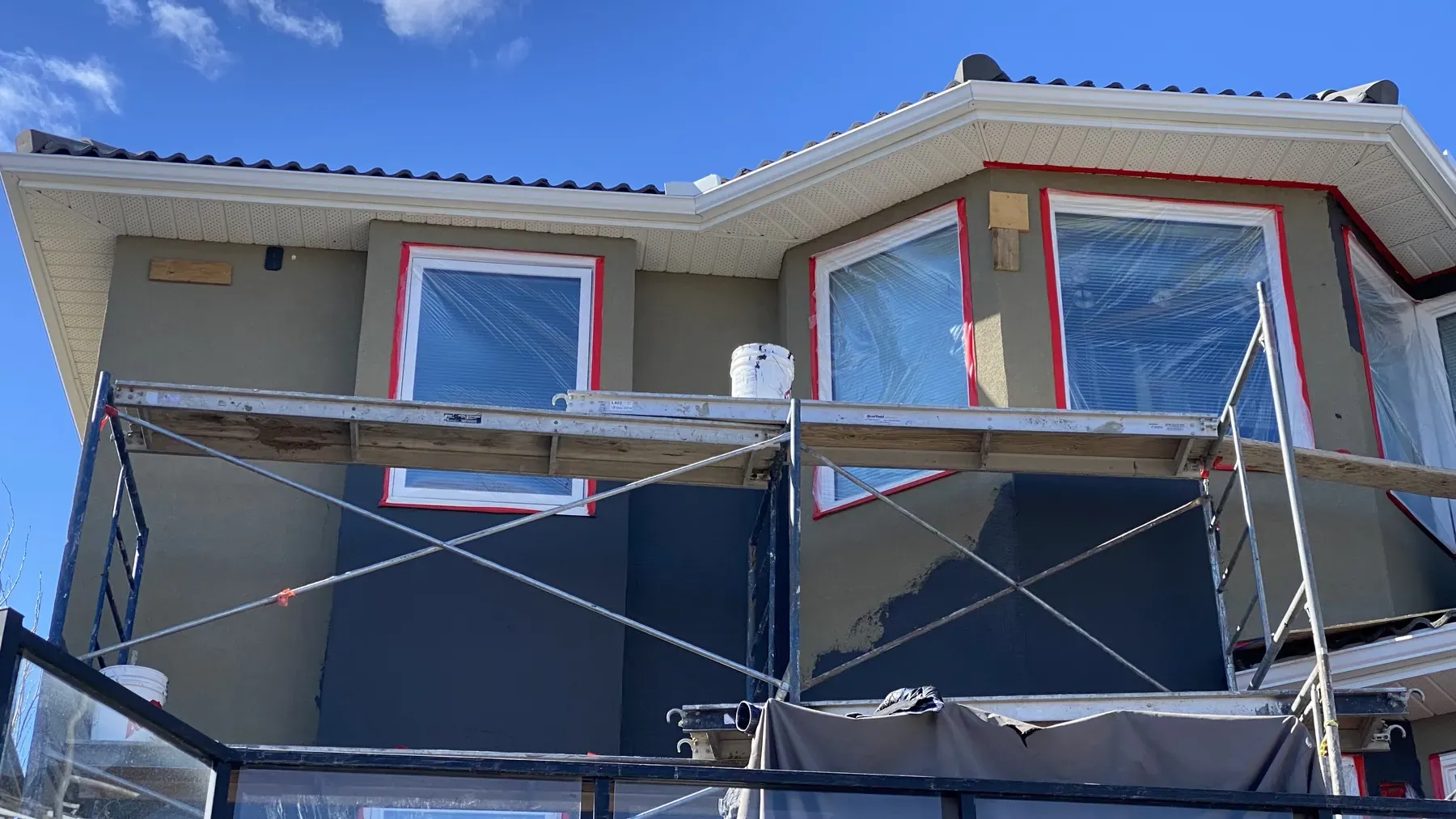
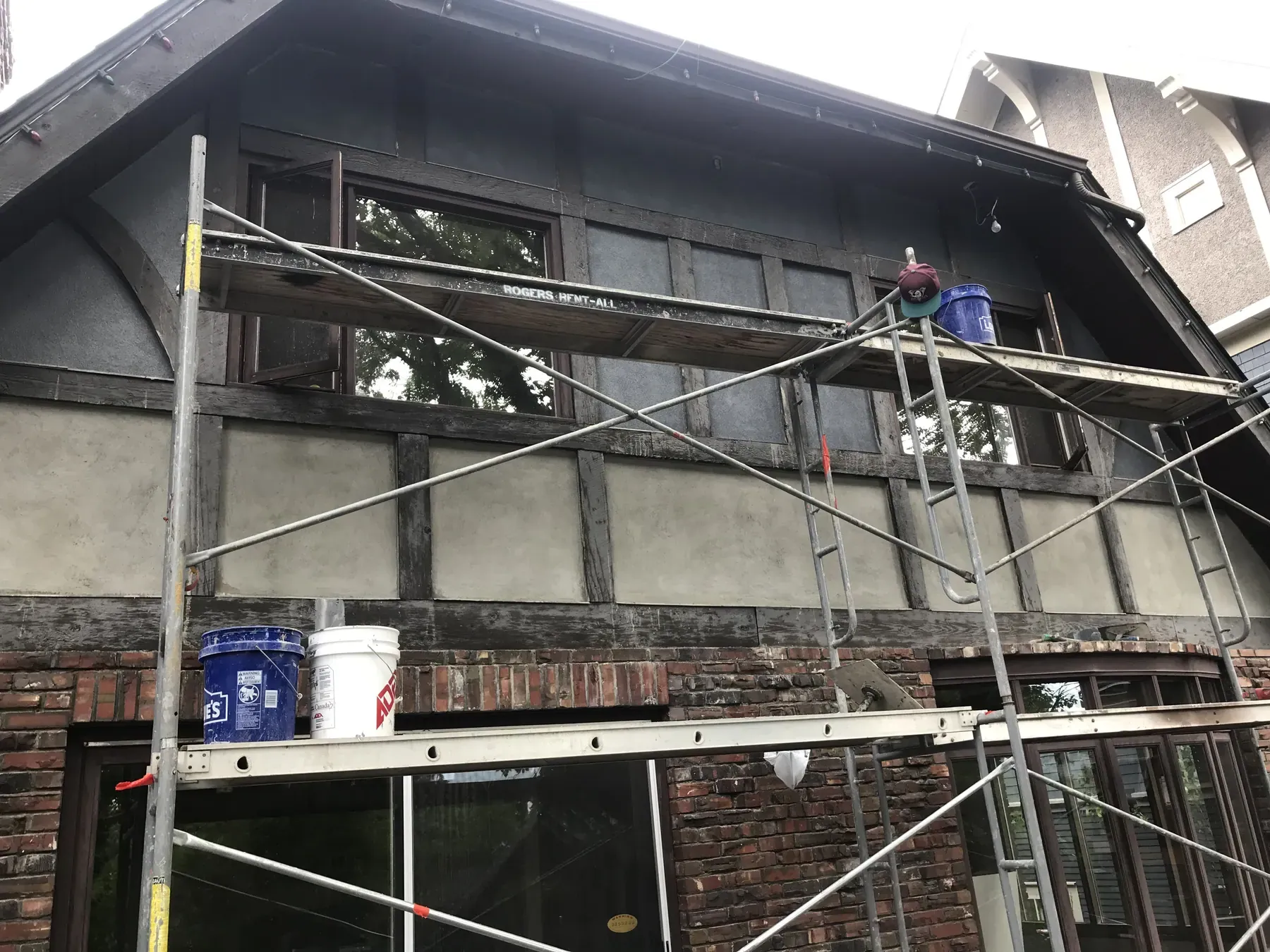
Two-storey house on scaffolding with window frames taped in red membrane and a dark base coat going on below old stucco

04 · How we work

How we build each layer on a Calgary exterior renovation

Each of the four risks above has a matching step in the way we build.

  1. Answers 01Water that gets behind the cladding

    We open the wall and rebuild the membrane first

    Where cladding comes off, we check the sheathing for soft or stained areas and replace what has failed. The code requires at least one layer of sheathing membrane beneath cladding, with joints lapped at least 100 mm (4 in) and upper sheets over lower sheets. Where there is no sheathing, it requires two layers. We install the membrane so every lap sheds water outward.

  2. Answers 02Flashing at windows, doors and roof lines

    We flash every opening and horizontal joint

    The code requires flashing at horizontal junctions between cladding materials and over openings that a deep enough eave does not shelter, extending at least 50 mm (2 in) up behind the membrane, sloped at least 6% outward, with end dams and a drip that sits at least 5 mm out from the face below. Window and door sills that are not self-flashing get a flashing underneath. Sealant goes between the cladding and every window and door frame. We schedule soffit, fascia and eavestrough work so downspouts and roof edges carry water past the new walls, not onto them.

  3. Answers 03Hail and impact damage

    We match the cladding to Calgary hail

    The City of Calgary rates cladding materials for hail and lists installed cost relative to standard vinyl, based on RSMeans 2020 cost data:

    Cladding Weather behaviour (City of Calgary) Installed cost vs standard vinyl Upkeep to plan for
    Standard vinyl siding Not recommended. Cheaper vinyl is easily damaged by hail and extreme heat. Baseline Replace cracked panels after storms
    Fibre cement siding Proven to stand up to strong wind and hail storms without damage +65% Keep it painted with water-resistant paint
    Cement stucco and EIFS Hold up to moderate hail and wind-blown debris. Severe storms can damage them. +70% Seal cracks. Keep EIFS sealant joints intact.
    Stone Resists fire and high winds. Susceptible to cracks in freeze-thaw. +455% Keep de-icing salt off the stone

    After a storm, we document hail damage elevation by elevation with photos and measurements, and write the repair scope in line items so you and your adjuster are comparing the same quantities.
  4. Answers 04Cold weather during installation

    We plan the season around curing temperatures

    The code requires cement stucco to be kept at 10°C (50°F) or warmer during application and for at least 48 hours after, on a base kept above freezing. Acrylic finish coats need 4°C (40°F) or warmer for 24 hours. Manufactured stone mortar needs protection below 4°C. Vinyl siding needs a 3/8 in (9.5 mm) end gap instead of 1/4 in (6.4 mm) when installed below 4.4°C (40°F). In cold months we either enclose and heat the work or reschedule it, and the schedule in your quote says which.

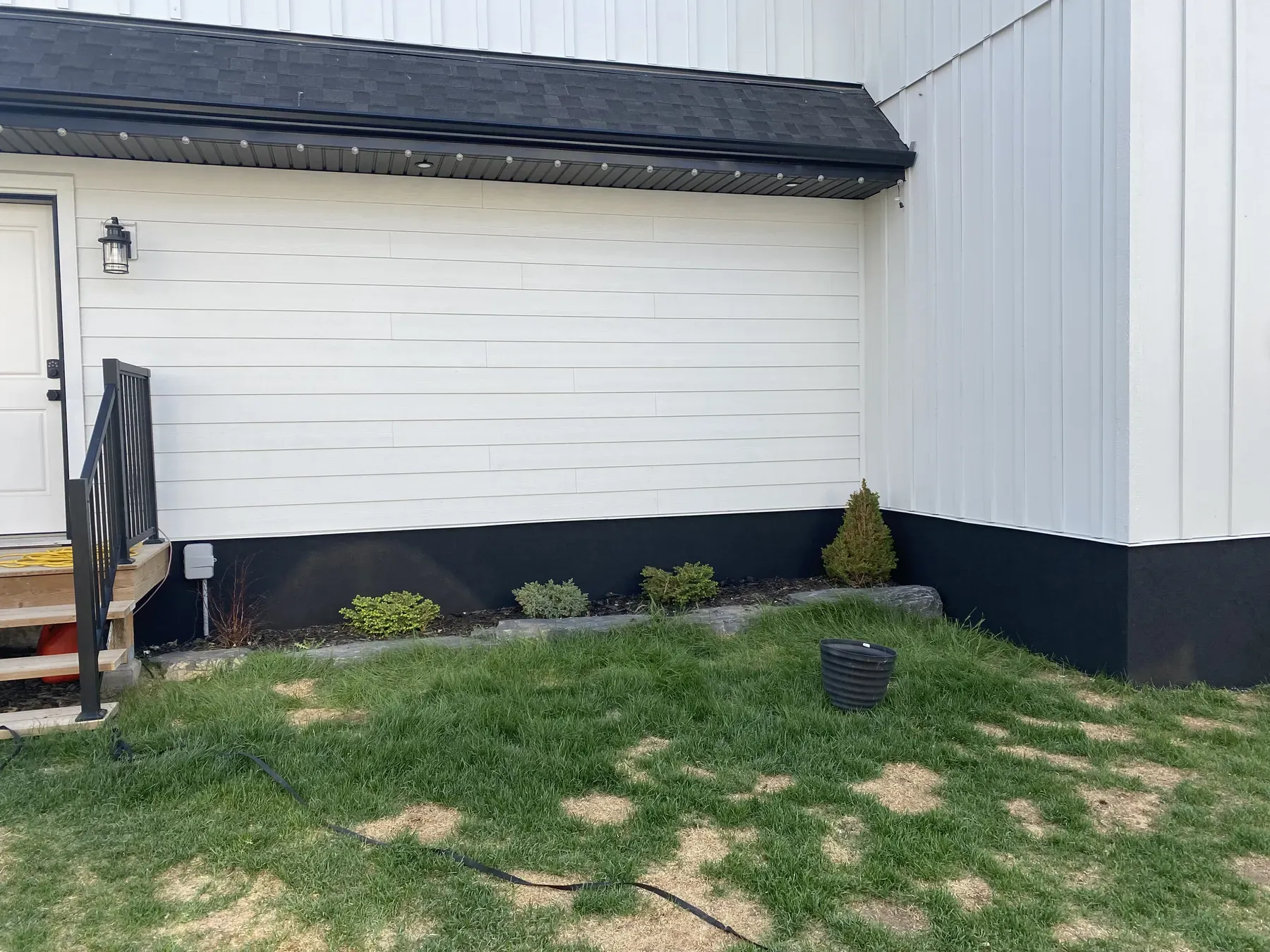
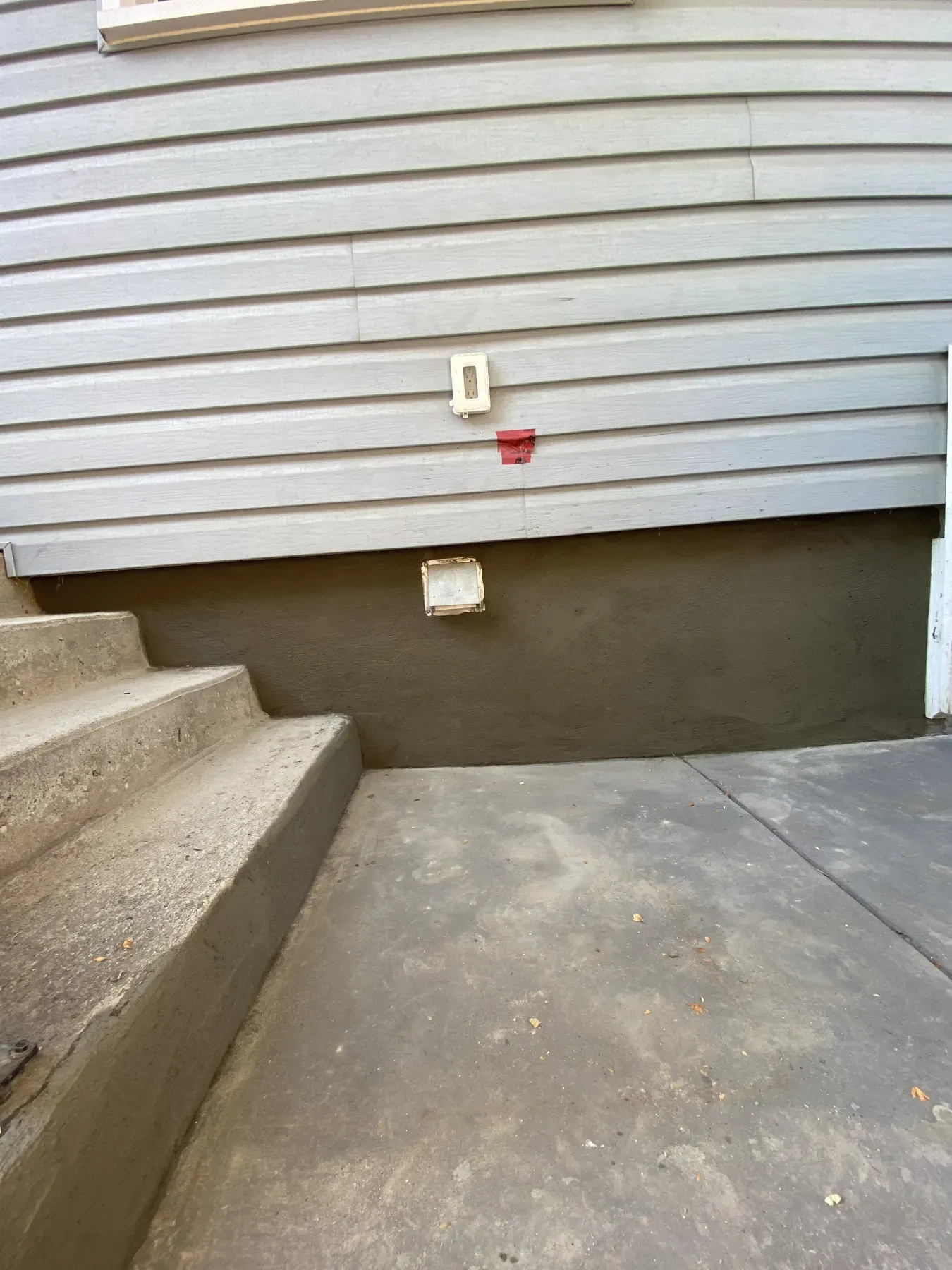
    Rear of a home reclad in white lap and vertical siding over a black parged foundation

05 · In short

Exterior renovations in Calgary, built from the wall out

An exterior renovation replaces or repairs the cladding, flashing and weather barrier of a building, and in Calgary it lasts when the hidden layers are built as carefully as the finish. Sela Developments runs the whole job: permits, removal, sheathing repair, membrane, flashing, cladding, parging and cleanup, with each layer photographed before it is covered.

Pick the cladding that suits the building and the budget: three-coat or acrylic stucco, vinyl, fibre cement or engineered wood siding, EIFS with insulation built in, or natural and manufactured stone veneer. If the work is inside the house, see home renovations in Calgary, or go back to general contracting in Calgary for the full list of services. You can see finished walls on our projects page, and when you are ready, send us the address and a few photos.

Sources

9 cited

Last reviewed October 22, 2026 by the Sela Developments team. See our editorial policy for how we write and check these pages.

On the job

FAQ

Questions we get asked

Short answers to what owners ask us most. Something else? Ask us directly.

Do I need a permit for an exterior renovation in Calgary?

Most repair and replacement work does not need a City of Calgary permit, and neither does a new door or window of the same size. Replacing siding with a different siding material needs a building permit, and a larger or smaller window or door needs a development permit and a building permit. We confirm which permits your scope needs before the quote is final.

Can you repair hail damage and work with my insurance claim?

Yes. We inspect the walls, photograph the damage, measure each elevation and write an itemized scope you can compare line by line with the adjuster's estimate. The insurer decides what the claim covers. We price the work that the wall actually needs, and repairs start once you approve the scope in writing.

Can exterior work be done in a Calgary winter?

Some of it. The building code requires cement stucco to be kept at 10°C or warmer while it goes on and for 48 hours after, with the base kept above freezing. In cold weather that means heated hoarding or waiting for spring. Vinyl siding can go on in the cold with wider end gaps, and stone mortar must be protected below 4°C.

Should I re-stucco my house or switch to siding?

It depends on the condition of the wall, the look you want and your budget. Re-stucco keeps the same material and usually avoids a material-change permit. Switching to siding needs a City of Calgary building permit. Both need a sound membrane and flashed openings. Our stucco and siding pages compare the two in detail.

What should I check before hiring a contractor after a hailstorm?

Ask for a City of Calgary business licence, which you can confirm by calling 311. If someone sells you residential work at your door and wants money before the work is finished, Alberta requires that business to hold a prepaid contracting licence. Get the scope, price and schedule in writing before paying anything.

Book an exterior assessment

Send the address, a few photos of each side of the building and what you want changed. We visit, check the walls, and send a written quote that lists each layer of the work, the permits and the schedule.