Skip to content
Sela Developments

Siding Installation in Calgary

Siding is cladding fastened to the wall in boards or panels, most often vinyl, fibre cement such as James Hardie, engineered wood, or steel and aluminum. Sela Developments installs and replaces siding in Calgary over a lapped sheathing membrane with flashed openings, following each manufacturer's instructions. For hail, the City of Calgary rates fibre cement and steel well and does not recommend standard vinyl. Switching from one siding material to another needs a City of Calgary building permit, which we apply for.

Siding we install
Vinyl, fibre cement, engineered wood, steel and aluminum
City of Calgary permit
Building permit when switching to a different siding material
Sheathing membrane laps
100 mm (4 in) minimum, upper over lower
Vinyl nailing
Centre of the slot, about 1/32 in (0.8 mm) under the nail head
Vinyl end gap
1/4 in (6.4 mm), or 3/8 in (9.5 mm) below 4.4°C (40°F)
Fibre cement lap overlap
1 1/4 in (32 mm) minimum
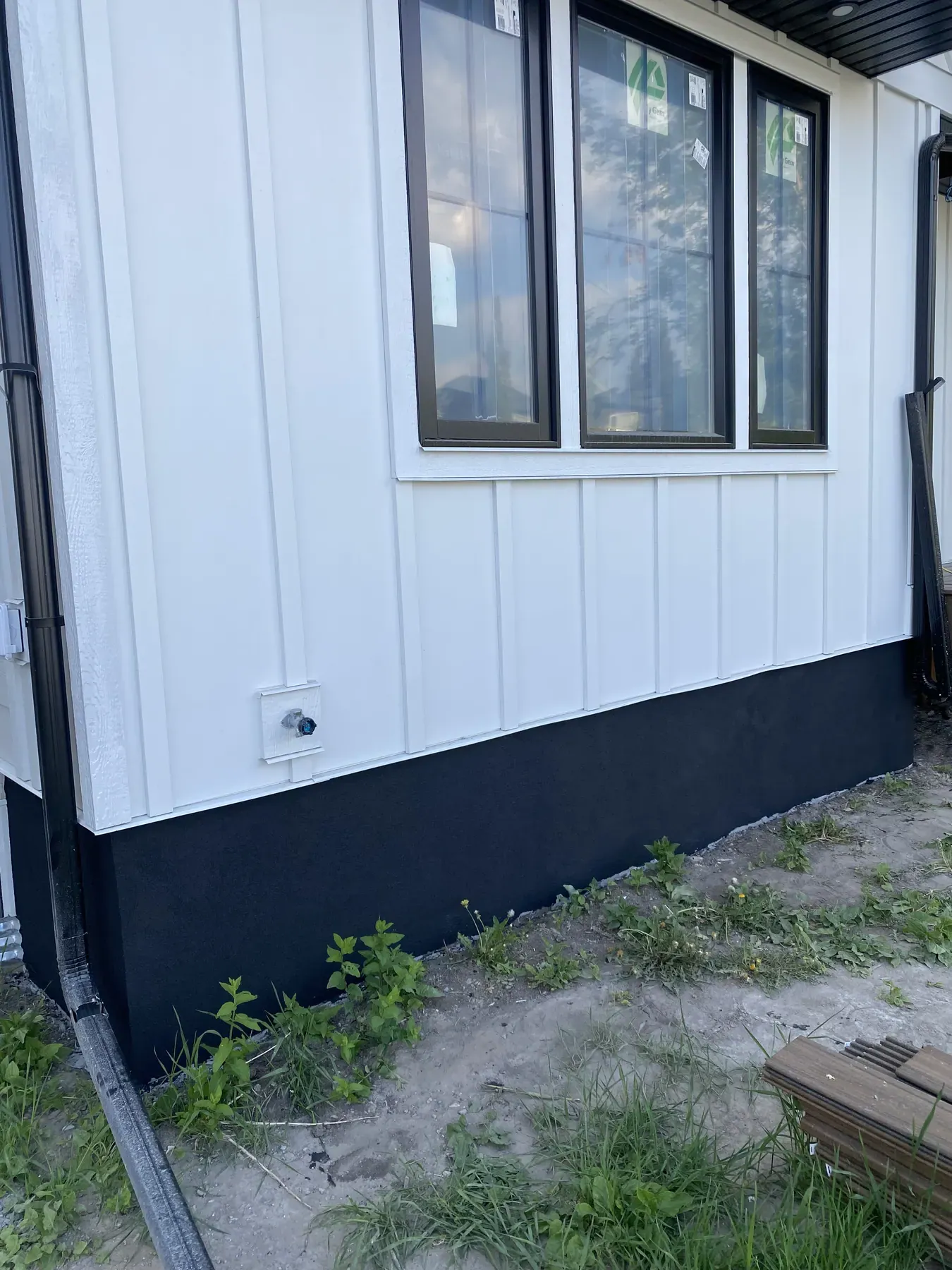
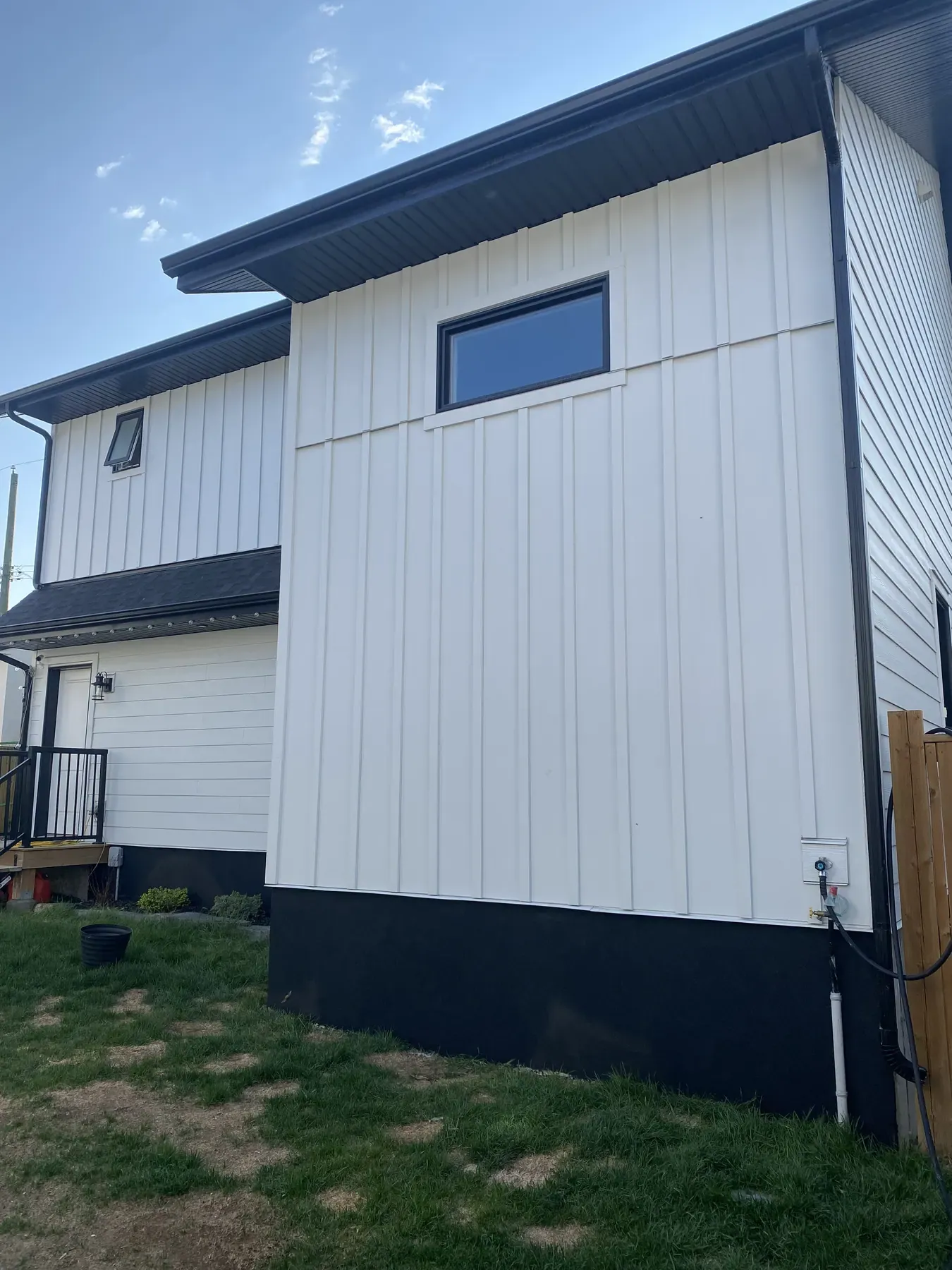
Two-storey home with white board and batten siding above a black parged foundation
Board and batten siding over a parged foundation, Calgary.

01 · Overview

What exterior siding is and what goes behind it

Siding is a cladding of boards or panels that is fastened to the wall and overlaps so water runs down and off. In Calgary the main choices are vinyl, insulated vinyl, fibre cement such as James Hardie (often called Hardie board), engineered wood such as LP SmartSide, and steel or aluminum.

Behind every type the National Building Code, Alberta Edition asks for the same things:

  • A sheathing membrane. At least one layer, joints lapped at least 100 mm (4 in), upper sheets over lower.
  • Flashing. At horizontal joints between cladding materials and over openings, sloped outward with end dams.
  • Sealant. Between the siding and every window and door frame.
  • Product standards. Vinyl siding must meet ASTM D3679, insulated vinyl ASTM D7793, and steel siding must be at least 0.33 mm thick and meet CSSBI 23M.

As siding contractors in Calgary, Sela Developments removes old cladding, repairs the sheathing and membrane, flashes the openings, installs the siding and parges the exposed foundation below it.

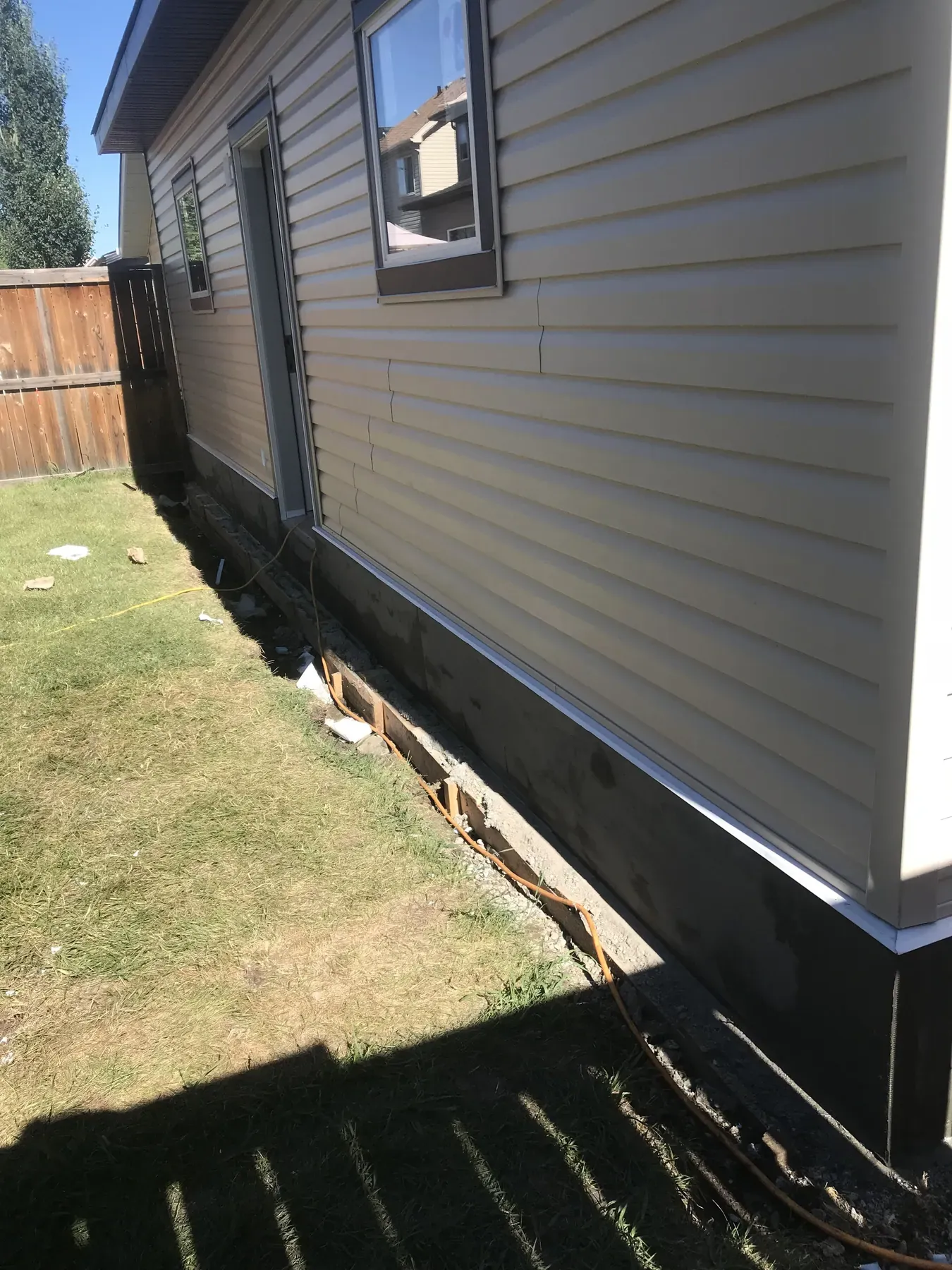
New beige vinyl siding on the side of a house above freshly parged foundation, with the trench still open

02 · Before you start

What to weigh before choosing siding in Calgary

Four questions come up on every siding job.

01

Vinyl, fibre cement, engineered wood or metal?

Each material has a different price, weight, look and maintenance cycle. The City of Calgary puts installed cost for engineered wood at 45% above standard vinyl, fibre cement at 65% above, and steel at 100% above, based on RSMeans 2020 data.
How we handle it
02

How does it handle Calgary hail?

The City of Calgary describes Calgary as part of “hail alley”, the area of Canada that sees the most hail. The August 5, 2024 storm caused nearly $2.8 billion in insured damage, according to the Insurance Bureau of Canada. The City’s own hail checklist asks homeowners whether they have aluminum or vinyl siding.

How we handle it
03

What details are hidden behind the panels?

Starter strips, nail placement, end gaps, overlaps, flashing and clearances to grade are covered up on the day they are installed. If one of them is wrong, the problem stays hidden until the wall shows damage.

How we handle it
04

Stucco or siding?

Owners recladding a stucco house often ask whether to switch to siding. The decision affects cost, look, permit and how repairs are made later.

How we handle it

03 · Key insight

Siding works because it is loose: every product needs room to move and a path for water

Siding is not glued to the house. It hangs on fasteners that let it expand and contract, and water that gets behind it has to run down and out. Install it tight and it buckles. Seal it shut at the bottom and water stays in.

The code builds this in. Vinyl fasteners must go in the centre of the nailing slots. The code also treats loosely fastened cladding with a clear air space behind it (at least 10 mm deep at the bottom of each piece) as a capillary break. In Calgary, where the code lists a moisture index of 0.4, a separate drained gap behind the siding is not required for houses and small buildings, so the membrane and the way each piece is lapped do the work.

That is why we treat the instructions for each product as the specification, not a suggestion.

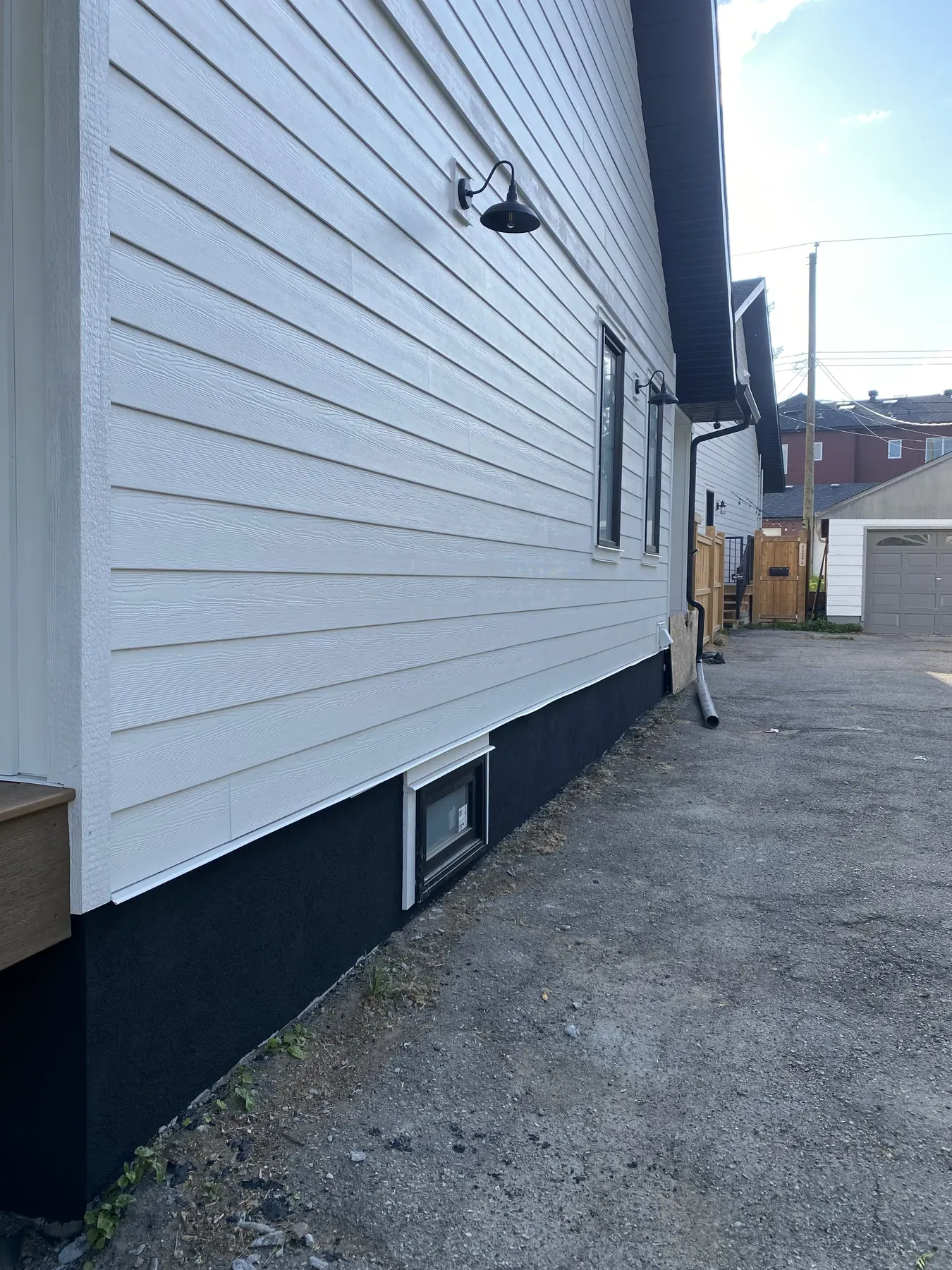
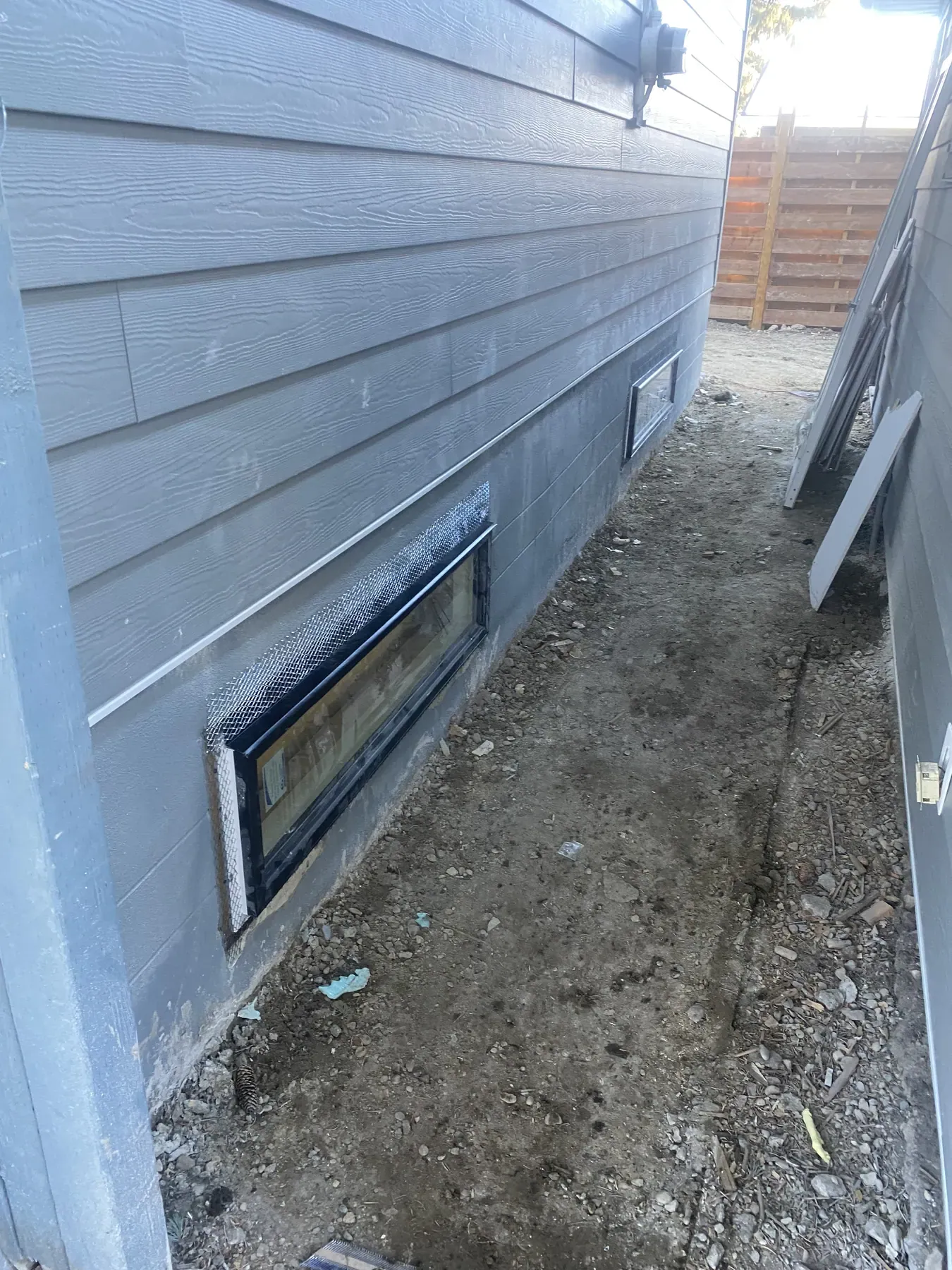
Grey fibre cement lap siding in a narrow side yard, with metal lath framing a basement window for parging

04 · How we work

How we answer each siding question

  1. Answers 01Vinyl, fibre cement, engineered wood or metal?

    We match the material to the house, the budget and the hail risk

    The right siding is the one whose hail rating and price you can both accept, and the City of Calgary’s comparison puts those side by side:

    Siding Hail and weather (City of Calgary) Installed cost vs standard vinyl
    Standard vinyl Not recommended. Cheaper vinyl is easily damaged by hail and extreme heat and can crack with weather swings. Baseline
    Insulated vinyl Some impact resistance against hail and high winds +60%
    Aluminum Hail can dent or scratch it without affecting the wall. Does not crack in freeze-thaw. +35%
    Engineered wood Better impact resistance than vinyl and aluminum. Handles freeze-thaw without warping. +45%
    Fibre cement Proven to stand up to strong wind and hail without damage. Must be kept painted. +65%
    Steel Stands up well to wind, rain, hail and winter storms +100%

    We price each option you are considering, so the difference is a number, not a guess.

  2. Answers 02How does it handle Calgary hail?

    We choose for hail, then document it

    For hail exposure, fibre cement and steel rate highest on the City’s comparison. If you choose James Hardie fibre cement, the HZ5 line is the one the company designs for freezing temperatures, snow and ice. After a storm we photograph and measure damaged siding elevation by elevation so the repair scope can be checked against the insurer’s estimate.

  3. Answers 03What details are hidden behind the panels?

    We install each product to its instructions

    The details we follow on every job:

    • Vinyl. Starter strip locked in first. Nails in the centre of the slot, with about 1/32 in (0.8 mm) left under the nail head. A 1/4 in (6.4 mm) gap at corner posts and channels, or 3/8 in (9.5 mm) below 4.4°C (40°F). Panels overlap about 1 in (25 mm).
    • Fibre cement. Water-resistive barrier behind it, a minimum 1 1/4 in (32 mm) lap, nails at least 3/8 in (9.5 mm) from plank ends, and primed boards painted within 180 days.
    • Engineered wood. LP’s panel siding instructions call for at least 6 in (152 mm) above finished grade, 1 in (25 mm) above walks, patios and rooflines, sealed cut edges, and a finish coat within 180 days.
    • Clearances. The code requires 200 mm (8 in) between finished ground and moisture-sensitive cladding such as untreated wood, plywood, OSB and hardboard, and 50 mm (2 in) above a roof. Where a roof meets a wall, a kickout flashing turns roof water away from the siding. Below the siding, the exposed foundation is parged.

    Where you or your designer want a drained rainscreen gap behind the siding, we build it with furring strips over the membrane.

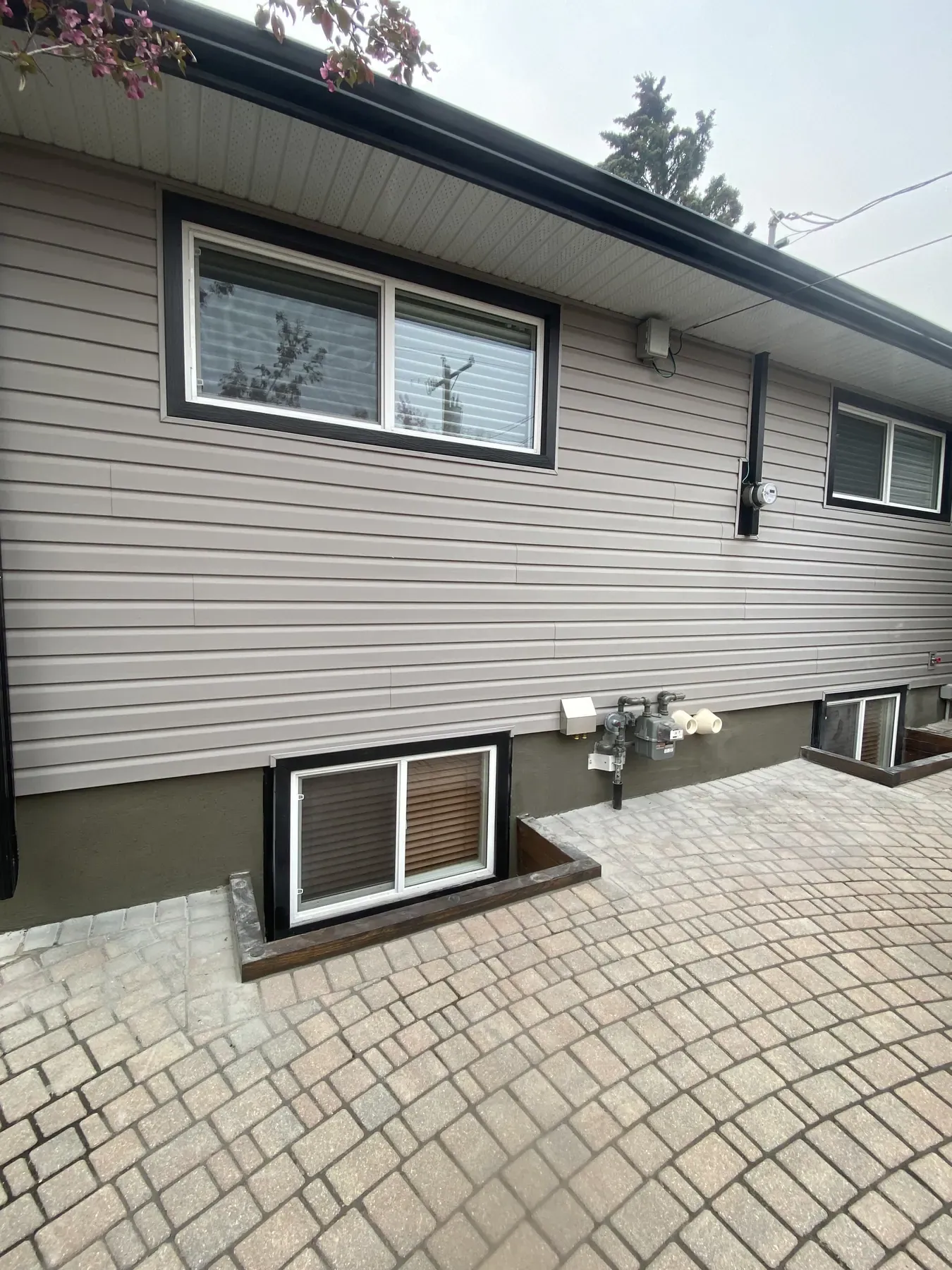
    Tan vinyl siding with black-trimmed windows above a parged foundation and basement window wells on a paver patio
  4. Answers 04Stucco or siding?

    We compare stucco and siding on the same wall

    Siding is lighter, can be installed in colder weather, and a damaged board can be replaced on its own. Cement stucco has no fasteners through its face, holds up to moderate hail, and in the City’s comparison costs about the same as fibre cement (70% above vinyl against 65%). Switching from stucco to siding needs a City of Calgary building permit. Read our stucco page for the other side of the comparison.

05 · In short

Siding in Calgary, installed so it can move and drain

Siding in Calgary lasts when the material suits the hail risk and each piece is fastened loose enough to move, lapped to shed water and set above grade. Sela Developments installs vinyl, fibre cement, engineered wood and metal siding over a lapped membrane with flashed openings, and applies for the building permit when you change materials.

Compare siding with three-coat and acrylic stucco, or see how siding fits a full exterior renovation in Calgary. When you are ready, send us photos of the house and we will book a measure.

Sources

7 cited

Last reviewed October 22, 2026 by the Sela Developments team. See our editorial policy for how we write and check these pages.

On the job

FAQ

Questions we get asked

Short answers to what owners ask us most. Something else? Ask us directly.

Which siding stands up to hail in Calgary?

The City of Calgary says fibre cement board has been proven to stand up to strong wind and hail storms without damage, and that steel stands up well to hail. Aluminum can dent without affecting the wall. The City does not recommend standard vinyl because cheaper vinyl is easily damaged by hail and extreme heat. Insulated vinyl adds some impact resistance.

Do I need a permit to replace siding in Calgary?

Like-for-like repair or replacement usually does not need a permit. The City of Calgary lists replacing siding with a different siding material as work that needs a building permit, so going from vinyl to fibre cement, or from stucco to siding, means a permit. We confirm the permit during the quote and apply for it.

Is James Hardie siding suitable for Calgary winters?

James Hardie makes an HZ5 product line for climates with freezing temperatures, extreme seasonal temperature swings, snow and ice, with a surface engineered for paint adhesion and moisture resistance and an added drip edge. Fibre cement must stay painted. Primed boards need their finish paint within 180 days of installation.

Can siding be installed in winter?

Vinyl can, with care. Below 4.4°C (40°F), the end gap at corner posts and channels grows from 1/4 in to 3/8 in so panels have room to expand in summer. Primed fibre cement and engineered wood need their finish coat within 180 days of installation, so boards hung in late fall are painted once temperatures meet the paint maker's limits.

Should I replace stucco with siding?

Siding is lighter, faster to install in cold weather and easier to replace one board at a time. Stucco has no fasteners through the face and costs a little more than fibre cement by the City of Calgary's comparison. Switching needs a building permit. Either way, the membrane and flashing behind the cladding decide how long the wall lasts.

Get a siding quote

Send the address, photos of each side of the house and the siding you are considering. We measure, check the wall behind the old cladding, and send a written quote with the permit and schedule.